

What Is a Bantamarium? A Complete Guide to Micro Aquariums
Learn what a bantamarium is and how beginners and experienced aquarists can maintain a healthy micro-aquarium with plants, shrimp, and snails.

By Fishmetry Team
5 min read
Published at Dec 28, 2025, 12:30 PM
Reviewed for accuracy · Last updated Jan 4, 2026, 9:07 PM
A bantamarium is a compact, carefully managed aquarium designed to house very small aquatic life in a stable and ethical way. While often confused with decorative bowls or novelty tanks, a true bantamarium prioritizes biology, water stability, and animal welfare. This guide explains what a bantamarium is, how it works, and why even beginners can succeed with this minimalist setup when proper care and attention are applied.
1. Understanding What a Bantamarium Is
Definition and Purpose
A bantamarium is a micro-aquarium, typically ranging from 2 to 10 liters, created to support organisms with a very low bioload and limited space requirements.
Important: A bantamarium is not a shortcut or an “easy version” of an aquarium. Its small size demands attention to detail and consistent care.
Because of this:
- Bantamariums reward careful observation and routine maintenance.
- Beginners can succeed as long as they follow best practices and avoid overstocking.
What a Bantamarium Is Not
A bantamarium is not:
- A fish bowl
- A decorative jar with no filtration
- A temporary or disposable habitat
Its purpose is to maintain a stable, long-term micro-ecosystem.
Buy a complete bantamarium kit online
Browse these pre-assembled bantamariums, ideal for beginners and enthusiasts:
- Glowing Campsite Terrarium Kit | MINI
- Jurassic Jungle Terrarium Kit | NANO
- Prehistoric Desert Terrarium Kit | NANO
2. Appropriate Size and Stocking
In bantamariums, water volume directly affects stability, making size selection critical.
Recommended Sizes
- Minimum practical size: 3 liters
- Ideal range: 5–10 liters
Staying within this range gives beginners a better margin of safety while still benefiting from a compact setup.
Suitable Inhabitants
Bantamariums are most commonly recommended for:
- Neocaridina shrimp
- Small snails (Nerite, Ramshorn, Bladder snails)
- Microcrustaceans (copepods, seed shrimp)
- Aquatic plants
Can Fish Live in a Bantamarium?
Some very small fish species may survive in bantamariums under carefully controlled conditions, especially with:
- Extremely low stocking levels
- Frequent maintenance
- Excellent filtration and plant coverage
However, while survival is possible, bantamariums are generally better suited for invertebrates and plants, where beginners achieve more consistent and ethical long-term results.
3. Water Parameters and Stability
Because of the reduced water volume, maintaining stable conditions is more important than chasing exact numbers.
- Temperature: 22–26 °C
- pH: 6.5–7.5
- GH: 5–10 dGH
- KH: 3–6 dKH
Small changes can happen quickly, so regular testing and visual observation are key habits—especially for newcomers.
A nano heater may be necessary depending on room temperature, but it must be reliable and appropriately sized.
4. Filtration and Oxygenation
Despite their size, bantamariums still require proper filtration and gentle water movement.
Because of this:
- Nano sponge filters are ideal
- Flow should remain very gentle
- Light surface agitation supports gas exchange
In well-planted bantamariums, plants play a major role in oxygen production and waste absorption, increasing overall system stability.
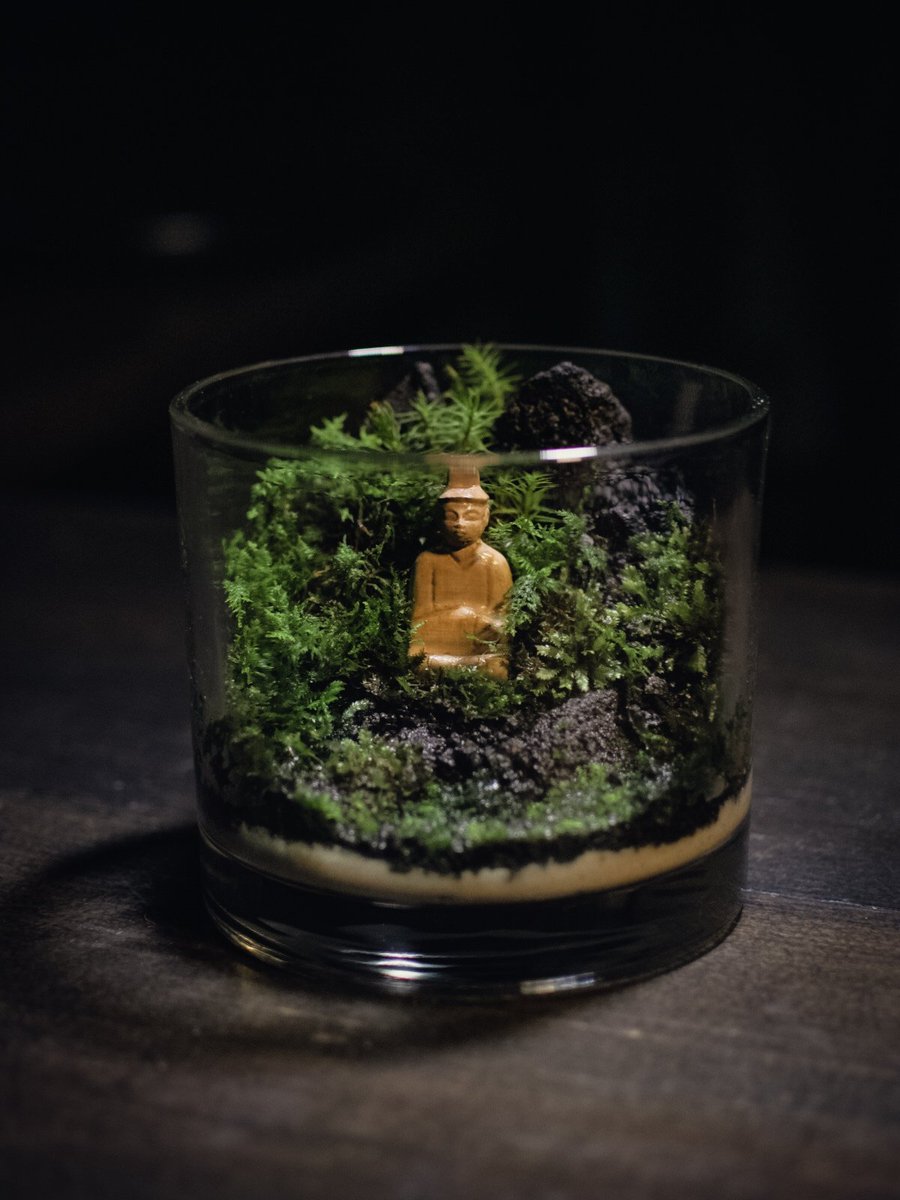
Bantamarium with a tiny Japenese sculpture
5. Step-by-Step Bantamarium Setup
1. Choose the Container
Select a glass nano aquarium with a wide opening. This makes maintenance easier and improves gas exchange—both important for beginners.
2. Add Substrate
Use fine sand or planted-aquarium substrate. Keep layers shallow to prevent waste buildup and anaerobic zones.
3. Add Plants and Hardscape
Plants are the foundation of a successful bantamarium. Recommended options include:
- Java moss
- Anubias nana
- Bucephalandra
- Floating plants like Salvinia or Frogbit
A plant-heavy layout helps beginners maintain water quality more easily.
4. Install Filtration and Heating
Add a nano sponge filter and, if needed, a small heater. In bantamariums, consistency matters more than equipment strength.
5. Cycle the Bantamarium
Allow the aquarium to fully cycle before adding animals. This step is essential and greatly increases success rates for beginners.
6. How to Perform PWA (Partial Water Changes)
Maintenance in a bantamarium is frequent but controlled.
Step-by-Step PWA Guide
- Use a pipette or airline tubing for precision.
- Remove 10–20% of the water.
- Match temperature and parameters carefully.
- Use a water conditioner if using tap water.
- Refill slowly to avoid disturbing plants or animals.
Recommended Frequency
- Shrimp or microfauna setups: 2–3 times per week
- Plant-only bantamarium: once per week
Regular, small changes are easier for beginners and reduce the risk of sudden parameter swings.
7. Final Tips for a Successful Bantamarium
- Start with plants and invertebrates before considering fish.
- Stock lightly and increase slowly over time.
- Observe daily—small systems communicate problems quickly.
- Feed sparingly to prevent waste accumulation.
- Test water regularly, especially in the first months.
- Treat the bantamarium as a detail-oriented system, not a decoration.
A bantamarium shows that aquariums do not need to be large to be successful. With attention, patience, and good habits, beginners and experienced aquarists alike can maintain a healthy, stable micro-ecosystem that is both educational and rewarding.