
Easy
Ember Tetra
Hyphessobrycon amandae

Apistogramma cacatuoides
Reviewed for accuracy · Last updated Jan 20, 2026, 2:07 AM
Territorial during breeding, generally calm otherwise, with complex social interactions and strong site fidelity.
Freshwater
Moderate
Medium
21 gal (80 L)
3 in (8 cm)
3–5 years
Omnivore
Resident
Choosing appropriate tank mates for the Cockatoo Dwarf Cichlid requires an understanding of its territorial instincts and micro-predatory nature. While not excessively aggressive, this species establishes and defends small territories near the substrate, particularly during spawning periods. Tank mates should therefore occupy different zones of the aquarium and exhibit calm, predictable behavior.
Small, peaceful schooling fish that inhabit the mid to upper water column are generally excellent companions. Their constant movement helps distribute aggression and reduces fixation on any single individual. Species that are too slow, overly curious, or bottom-oriented may become targets of persistent chasing.
Other dwarf cichlids can sometimes be kept together in larger aquariums, but this setup demands careful planning, extensive visual barriers, and close observation. Mixing Apistogramma species often results in interspecific aggression or hybridization risks, making it unsuitable for most keepers.
Bottom dwellers such as small Corydoras catfish can coexist successfully if the tank footprint is large enough and hiding spots are abundant. However, during breeding, females may aggressively defend nesting sites and harass intruders, including otherwise compatible species.
Avoid large, aggressive cichlids or fin-nipping fish, as these create constant stress and disrupt natural behavior. A well-planned community focused on peaceful species will allow the Cockatoo Dwarf Cichlid to display its full range of colors, social interactions, and breeding behaviors without chronic tension.
Hyphessobrycon amandae

Nannostomus beckfordi
The Cockatoo Dwarf Cichlid is a South American dwarf cichlid that inhabits slow-moving tributaries and flooded forest areas of the Amazon basin. In aquariums, stability and environmental structure are the foundation of long-term success. This species thrives in well-established tanks where biological filtration is mature and water chemistry remains consistent over time. Sudden fluctuations in temperature, pH, or hardness often lead to stress, suppressed immune response, and reduced coloration.
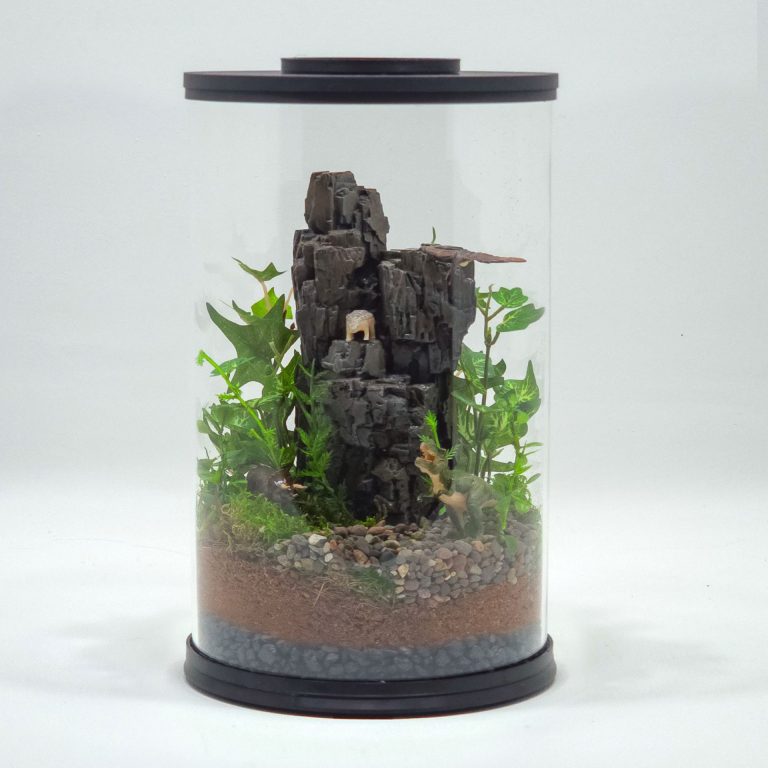
A soft, sandy substrate is strongly recommended, as it allows natural foraging behavior and reduces the risk of mouth or fin damage. Leaf litter, driftwood, and root structures are essential components of the aquascape, not only for visual authenticity but also for behavioral health. These elements create visual barriers that reduce territorial tension, especially when more than one male or multiple females are present.
Dense planting using hardy species or floating plants helps diffuse lighting, closely mimicking the shaded environments this fish naturally occupies. Gentle water flow is preferred, as strong currents cause chronic stress and excessive energy expenditure. Filtration should prioritize biological efficiency over raw flow rate.
Regular partial water changes are critical. Weekly changes of 20–30% using dechlorinated water with similar parameters help prevent the accumulation of dissolved organic waste. Because Apistogramma are sensitive to nitrogenous compounds, ammonia and nitrite must always remain at zero, and nitrate should be kept as low as possible.
While adaptable compared to some other dwarf cichlids, this species reaches its full behavioral and reproductive potential only in aquariums that emphasize environmental enrichment, water stability, and a layout designed around territory formation rather than open swimming space.
In the wild, Apistogramma cacatuoides feeds primarily on small invertebrates, insect larvae, micro-crustaceans, and organic debris found among leaf litter. This natural diet is rich in protein and variety, which should be replicated as closely as possible in captivity to ensure optimal health and coloration.
A high-quality feeding regimen should include a mix of prepared and live or frozen foods. Premium micro pellets or granules formulated for carnivorous or omnivorous cichlids provide a reliable nutritional base. These should be small enough to be easily consumed without excessive competition.
Supplementing with frozen foods such as bloodworms, brine shrimp, daphnia, and cyclops significantly enhances dietary diversity. Live foods, when sourced safely, strongly stimulate natural hunting behavior and are especially valuable when conditioning fish for breeding.
Feeding should be done in small portions once or twice daily. Overfeeding quickly degrades water quality, which dwarf cichlids are particularly sensitive to. Uneaten food should never be allowed to accumulate on the substrate.
A varied and controlled diet not only supports physical growth but also plays a major role in immune function, reproductive success, and behavioral confidence. Fish maintained on monotonous or low-quality diets often display faded coloration, reduced activity, and increased susceptibility to disease.
Breeding the Cockatoo Dwarf Cichlid is achievable in home aquariums when environmental and social conditions are properly managed. This species is a cave spawner, with females selecting and defending small enclosed spaces where eggs are laid and cared for. Providing multiple caves or coconut shells greatly increases the likelihood of successful spawning.
Conditioning is the first step toward breeding. Both males and females should receive a protein-rich diet consisting of live and frozen foods for several weeks. Slightly warmer temperatures and soft, mildly acidic water further encourage reproductive behavior.
Once a female is ready to spawn, her coloration intensifies, often turning bright yellow with strong black markings. She will select a cave and entice a male to fertilize the eggs. After spawning, the female assumes full responsibility for egg and fry care, aggressively defending the territory against all intruders.
Eggs typically hatch within a few days, and fry become free-swimming shortly afterward. At this stage, infusoria, newly hatched brine shrimp, or specialized fry foods are essential for survival and growth. The female will herd the fry and maintain tight control over their movement.
In community tanks, survival rates are often low due to predation. For higher success, a dedicated breeding aquarium is recommended. Stable water parameters, minimal disturbance, and abundant microfoods are the key factors that determine long-term breeding success with this species.
Some links on this page may earn Fishmetry a commission at no extra cost to you.