Easy
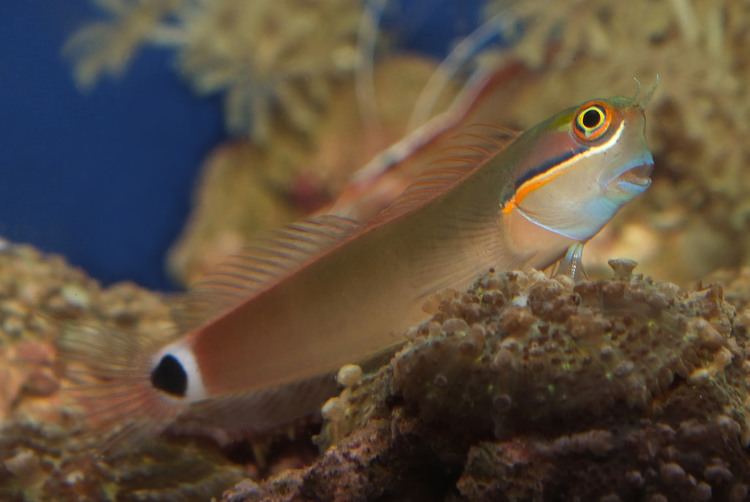
Tail-Spot Blenny
Ecsenius stigmatura
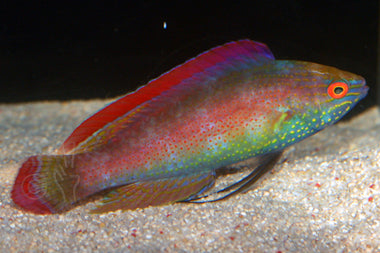
Cirrhilabrus rubrimarginatus
Reviewed for accuracy · Last updated Jan 5, 2026, 1:44 AM
Colorful and moderately active wrasse that remains peaceful but may display dominance toward similar species.
Marine
Moderate
Medium
66 gal (250 L)
4 in (10 cm)
5–8 years
Carnivore
Resident
Red-Margin Fairy Wrasses are peaceful with most reef fish. They coexist well with calm community species. Avoid mixing with aggressive or dominant wrasses. Territorial disputes may occur with similar species.
Introduce this wrasse after more passive fish. This reduces dominance-related issues. Large tanks significantly improve compatibility. Visual barriers help reduce aggression.
They are reef-safe with corals and invertebrates. Shrimp and snails are generally ignored. Monitor feeding interactions carefully. Ensure equal food access.
Thoughtful stocking promotes harmony. Observe behavior during acclimation. Peaceful setups enhance natural displays. Compatibility is high with proper planning.
Ecsenius stigmatura
Red-Margin Fairy Wrasses require spacious, well-established reef aquariums. They benefit from large swimming areas and complex rock structures. Secure lids are critical due to strong jumping tendencies. Stable reef parameters are essential for long-term health.
Excellent water quality must be maintained consistently. They prefer moderate flow and high oxygen levels. Sudden environmental changes cause stress quickly. Stability supports coloration and activity.
Lighting should follow reef standards. They show enhanced coloration under balanced lighting. Rock crevices allow retreat and resting. Avoid overly sparse aquascapes.
This species suits intermediate aquarists. Careful observation helps manage social dynamics. Proper planning ensures peaceful integration. They reward good care with striking displays.
Red-Margin Fairy Wrasses are strict carnivores. They feed on zooplankton in natural environments. Captive diets should include varied meaty foods. Frequent small feedings are recommended.
Offer mysis shrimp, brine shrimp, and copepods. High-quality frozen blends work very well. Pellets may be accepted after acclimation. Food size must remain small.
Regular feeding reduces territorial behavior. Underfeeding may increase aggression. Overfeeding should be avoided. Balance feeding with filtration capacity.
Vitamin supplementation supports immune health. Rotate food sources often. Observe feeding response closely. Healthy fish remain active and colorful.
Breeding Red-Margin Fairy Wrasses in captivity is very uncommon. They are pelagic spawners with complex courtship behaviors. Spawning typically occurs at dusk. Males display intense coloration during displays.
Eggs are released into the water column. They receive no parental care. Larvae are extremely delicate. Specialized rearing systems are required.
Live plankton is necessary for larval feeding. Survival rates are very low in captivity. Most home aquariums cannot support breeding. Breeding remains limited to research facilities.
Despite this, courtship displays are observable. Healthy adults may perform mating dances. Stable conditions encourage such behaviors. Breeding is not expected in standard reef tanks.
Some links on this page may earn Fishmetry a commission at no extra cost to you.