Pro
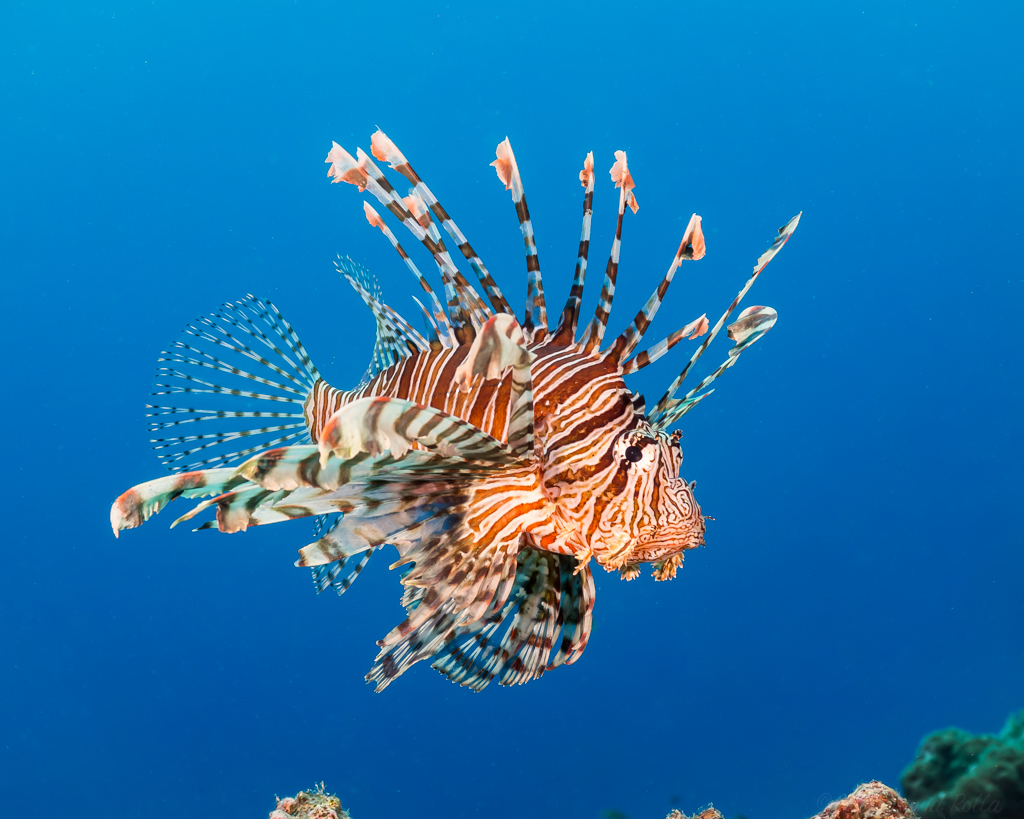
Red Lionfish
Pterois volitans

Echidna nebulosa
Reviewed for accuracy · Last updated Jan 20, 2026, 12:16 AM
A nocturnal, cave-dwelling moray that is bold at feeding time yet reclusive, relying on scent to hunt crustaceans.
Marine
Aggressive
Hard
79 gal (300 L)
31 in (80 cm)
15–20 years
Carnivore
Resident
Selecting appropriate tank mates for the Snowflake Moray requires careful consideration of size, behavior, and feeding habits. This species is predatory by nature and will instinctively consume small fish and mobile invertebrates that fit into its mouth. Shrimp, crabs, and other crustaceans are particularly vulnerable, as they form a significant part of the eel’s natural diet. For this reason, clean-up crew composition must be adjusted toward snails and other less mobile invertebrates.
Suitable tank mates include larger, robust marine fish that are not easily intimidated and do not resemble prey items. Examples include tangs, larger angelfish, rabbitfish, and some wrasses that exceed the eel’s gape size. These fish should be confident swimmers and able to coexist without harassing the eel in its shelter. Passive or slow-moving fish may experience stress if housed with a moray, even if not directly attacked.
Territorial disputes can arise if tank mates attempt to occupy the same caves or crevices. Providing multiple hiding zones reduces competition and promotes coexistence. While Snowflake Morays are not actively aggressive toward large fish, they are opportunistic feeders and may strike during feeding time if startled. A well-fed eel in a spacious aquarium with carefully chosen companions can coexist successfully in a community marine setup.
Pterois volitans
The Snowflake Moray Eel is a robust marine species that thrives in stable reef aquarium environments designed around its natural behavior. This eel spends the majority of daylight hours hidden within rock crevices, caves, or artificial shelters, emerging primarily during low-light periods. An aquarium intended for Echidna nebulosa must prioritize structural complexity, with extensive live rock formations securely stacked to prevent collapse. Rockwork should create narrow tunnels and shaded retreats that allow the eel to feel protected, reducing stress and escape attempts.
Water quality stability is critical for long-term health. As a marine species, this moray requires consistent salinity within a narrow range and does not tolerate rapid fluctuations. Strong biological filtration is essential due to its protein-heavy diet, which produces significant waste. Mechanical filtration should be capable of removing uneaten food quickly, while protein skimming is highly recommended to maintain water clarity and low nutrient levels. Although the species does not require intense lighting, moderate reef lighting is acceptable as long as shaded zones are provided.
Tank security is a major consideration. Snowflake Morays are powerful and inquisitive, frequently testing openings and gaps. All lids, overflows, and cable openings must be tightly sealed to prevent escape. Substrate choice is flexible, but sand is preferred over coarse gravel, as it reduces abrasion when the eel moves along the tank bottom. With proper environmental design and stable parameters, Echidna nebulosa adapts well to captivity and becomes a long-lived, hardy display animal.
Echidna nebulosa is a strict carnivore with feeding adaptations specialized for crushing hard-shelled prey. In the wild, it primarily consumes crustaceans such as crabs, shrimp, and small lobsters, using its blunt, molar-like teeth. In captivity, its diet should replicate this nutritional profile as closely as possible to prevent deficiencies and behavioral issues.
Appropriate foods include pieces of shrimp, squid, clam, mussel, and marine fish flesh. Frozen foods should be fully thawed and rinsed before feeding to reduce phosphate input. Offering food via feeding tongs is strongly recommended, as it allows precise placement and reduces the risk of accidental bites. Hand-feeding should never be attempted, as morays have poor eyesight and rely heavily on scent, increasing the chance of injury.
Feeding frequency should be moderate, typically two to three times per week for adults. Overfeeding can lead to obesity and water quality deterioration, while underfeeding may increase predatory behavior toward tank mates. Vitamin supplementation using marine-specific additives can be beneficial, especially in long-term captive specimens. A consistent, varied diet supports immune health, proper growth, and stable temperament.
Breeding Snowflake Moray Eels in captivity is extremely rare and largely undocumented in home aquarium environments. In nature, Echidna nebulosa follows a complex reproductive cycle that includes pelagic spawning, where eggs and larvae drift in open ocean currents. The larval stage, known as the leptocephalus, is transparent, ribbon-like, and requires specialized planktonic conditions that are not feasible to replicate in standard aquaria.
Sexual dimorphism in this species is minimal, making it difficult to reliably distinguish males from females without invasive examination. Even when multiple individuals are housed together, successful pairing and synchronized spawning have not been consistently observed. Environmental triggers such as seasonal temperature shifts, lunar cycles, and changes in food availability are believed to play roles in wild reproduction.
Due to these limitations, Snowflake Morays available in the aquarium trade are collected from the wild rather than captive-bred. Responsible sourcing from reputable suppliers is important to reduce ecological impact. Aquarists should approach this species with the understanding that breeding is not a realistic goal and focus instead on providing optimal long-term care and environmental enrichment.
Some links on this page may earn Fishmetry a commission at no extra cost to you.