
Pro
Common Lionfish
Pterois miles
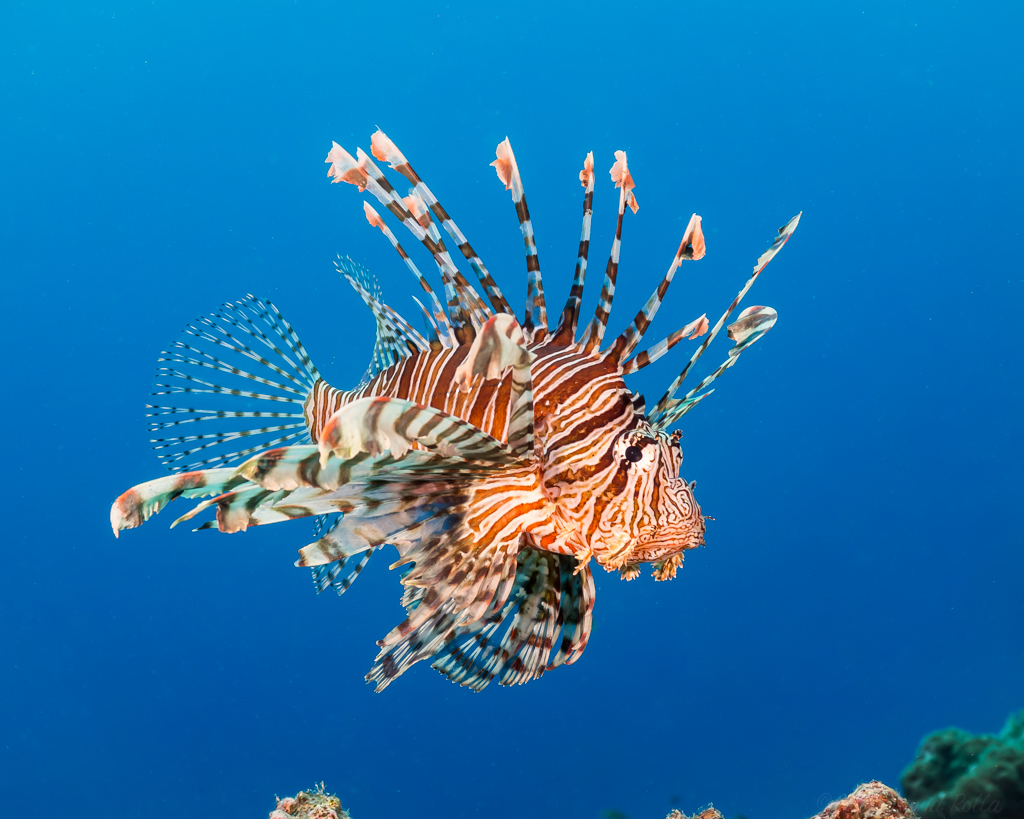
Pterois volitans
Reviewed for accuracy · Last updated Jan 13, 2026, 11:20 PM
Slow-moving ambush predator that is territorial, highly predatory toward smaller fish, and venomous but non-hostile to humans.
Marine
Very Aggressive
Pro
106 gal (400 L)
15 in (38 cm)
10–15 years
Piscivore
Resident
Tank mate selection for the Red Lionfish must prioritize size, temperament, and compatibility with a predatory species. Any fish small enough to fit into the lionfish’s mouth will eventually be eaten, regardless of prior peaceful coexistence. Therefore, suitable companions must be significantly larger-bodied and not overly aggressive or prone to fin-nipping.
Appropriate tank mates include large groupers, squirrelfish, larger angelfish, robust tangs, and similarly sized moray eels. These species share comparable environmental requirements and are generally ignored by lionfish due to their size. Bottom-dwelling species should be chosen carefully, as sedentary fish that remain near the substrate may still be perceived as potential prey.
Highly aggressive or territorial fish should be avoided, particularly those known to harass slow-moving species. Triggerfish and aggressive puffers may nip at the lionfish’s extended fins, causing stress or injury. Likewise, fast, boisterous swimmers can outcompete lionfish during feeding, leading to nutritional issues if not managed carefully.
Invertebrates are not safe with Pterois volitans. Crustaceans such as shrimp and crabs are considered natural prey and will be consumed. While lionfish can coexist with corals in reef systems, their feeding habits and waste production often make fish-only systems easier to manage. A carefully planned community of large, calm marine predators is the key to long-term harmony.
Pterois miles

Pterois antennata

Zebrasoma flavescens

Zebrasoma xanthurum
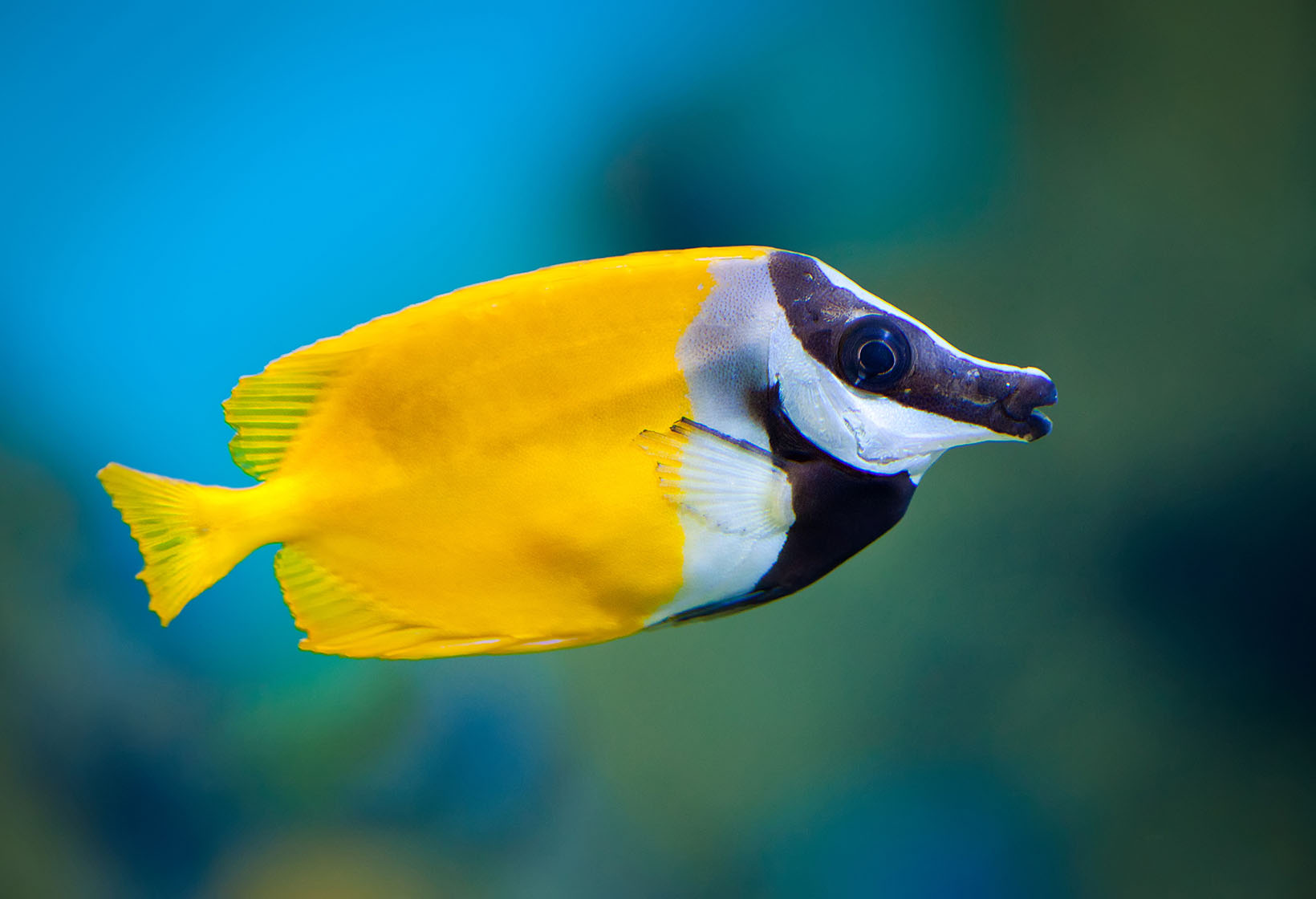
Siganus vulpinus
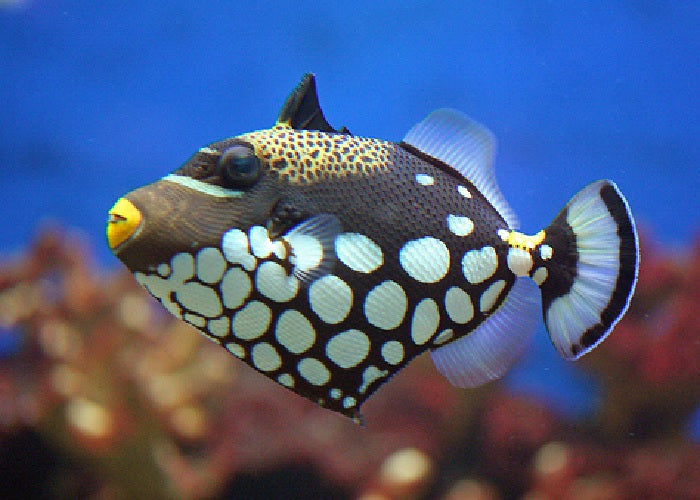
Balistoides conspicillum

Rhinecanthus aculeatus

Echidna nebulosa

Gymnomuraena zebra
The Red Lionfish is a large marine scorpionfish that requires a stable, mature saltwater aquarium designed around its predatory lifestyle. A minimum tank volume of 400 liters is recommended, though larger systems provide better stability and swimming space. Aquascaping should emphasize rock structures, caves, and overhangs that allow the fish to rest and ambush prey, as lionfish are naturally sedentary and spend long periods hovering or perching on rockwork.
Water quality must be excellent, with strong biological filtration to handle the heavy bioload associated with carnivorous feeding. Protein skimming is essential, and regular water changes help control nitrate buildup. Flow should be moderate rather than turbulent, allowing the fish to maneuver comfortably without constant resistance. Lighting is flexible, as lionfish tolerate a wide range of intensities, but subdued lighting often encourages more natural behavior.
Because Pterois volitans possesses venomous dorsal, anal, and pelvic spines, tank maintenance must be performed carefully. Aquarists should always be aware of the fish’s position when working in the aquarium to avoid accidental envenomation. Despite their intimidating appearance, lionfish are not aggressive toward humans and only sting defensively when threatened or handled improperly.
Long-term success depends on maintaining stable salinity, temperature, and pH, as lionfish are sensitive to rapid fluctuations. A well-established reef or fish-only-with-live-rock system provides the best environment, ensuring both biological stability and appropriate shelter. With proper care, Red Lionfish adapt well to captivity and can live for well over a decade.
The Red Lionfish is a strict piscivore in the wild, feeding primarily on smaller reef fish and crustaceans through ambush predation. In captivity, its diet must replicate this high-protein intake while ensuring nutritional balance. Most specimens initially require live foods, such as live shrimp or feeder fish, especially when newly imported or wild-caught.
Over time, lionfish can be trained to accept frozen and fresh meaty foods, which is strongly recommended to reduce disease risk and improve nutrition. Suitable foods include silversides, marine fish flesh, shrimp, squid, and other seafood preparations designed for marine predators. Feeding from a stick or tongs helps condition the fish to non-living foods and allows precise portion control.
Feeding frequency should be moderate, typically two to three times per week for adults. Overfeeding is a common mistake and can lead to obesity, fatty liver disease, and water quality deterioration. Each meal should be sized appropriately to avoid regurgitation or digestive stress.
Vitamin supplementation is advisable when feeding frozen or prepared foods, as nutritional deficiencies can develop over time. A varied diet ensures proper growth, immune function, and longevity. With consistent feeding routines and patience during the training phase, Pterois volitans adapts well to captive diets and remains a reliable feeder.
Breeding Red Lionfish in captivity is rare but documented, primarily in very large public aquaria or specialized private systems. In the wild, spawning typically occurs at dusk, with males courting females through subtle swimming displays and body positioning. When receptive, the female releases two large gelatinous egg masses that float to the surface.
These egg masses contain thousands of buoyant eggs and are fertilized externally. In an aquarium setting, successful spawning requires excellent water quality, stable environmental conditions, and ample space to accommodate natural courtship behavior. Sexing lionfish is difficult, as external sexual dimorphism is minimal, complicating intentional breeding efforts.
Larval rearing presents the greatest challenge. Lionfish larvae are planktonic and extremely small, requiring specialized live foods such as rotifers and copepod nauplii. Maintaining appropriate food density, lighting, and water quality during this stage is technically demanding and prone to high mortality.
As a result, most lionfish in the aquarium trade are wild-caught, and breeding remains an advanced endeavor. Aquarists attempting captive propagation must be prepared for intensive larval care and significant losses. Despite these challenges, successful breeding contributes valuable knowledge toward reducing wild collection pressure and improving sustainability.
Some links on this page may earn Fishmetry a commission at no extra cost to you.
What tank size is required for Red Lionfish care?
The Red Lionfish requires a minimum tank size of 120 gallons due to its adult size, long fins, and sedentary but territorial behavior. Larger aquariums provide better water stability and reduce stress for a Red Lionfish.
What do Red Lionfish eat in captivity?
The Red Lionfish is a carnivorous ambush predator that feeds on meaty foods such as marine fish, shrimp, and crustaceans. A varied diet of properly sized frozen foods supports long-term health in Red Lionfish.
Is Red Lionfish behavior aggressive toward tank mates?
Red Lionfish behavior is predatory rather than aggressive, meaning any fish small enough to fit in its mouth may be eaten. Larger, non-competitive species usually coexist peacefully with a Red Lionfish.
Can Red Lionfish live in community aquariums?
The Red Lionfish can live in a community aquarium with large, non-aggressive species such as Snowflake Eel and Blue Tang. Careful selection of tank mates is essential to avoid predation or stress.
Do Red Lionfish school or prefer solitary housing?
Red Lionfish are solitary by nature and do not school in captivity. Keeping multiple Red Lionfish together generally requires very large systems and careful monitoring to prevent territorial disputes.
Is Red Lionfish suitable for beginner saltwater aquarists?
The Red Lionfish is not ideal for beginners due to its venomous spines, specialized feeding needs, and impact on community compatibility. Intermediate to advanced aquarists are better suited to properly care for a Red Lionfish.