
Easy
Bronze Corydoras
Corydoras aeneus
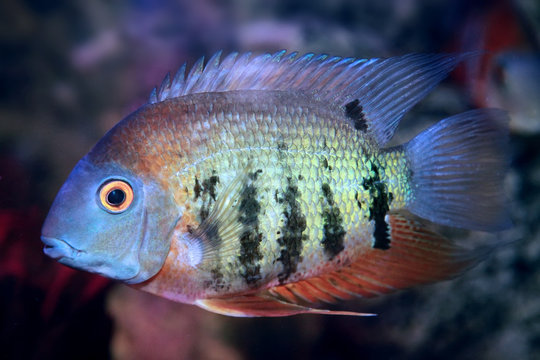
Heros efasciatus
Reviewed for accuracy · Last updated Feb 27, 2026, 3:57 AM
Generally calm and tolerant cichlid that may show territorial behavior during breeding but remains manageable in spacious aquariums.
Freshwater
Moderate
Medium
66 gal (250 L)
10 in (25 cm)
8–12 years
Omnivore
Resident
Severum Cichlids are best kept with peaceful to moderately assertive fish of similar size. They coexist well with species that share compatible water parameters and calm behavior. Tank mates should not be overly aggressive or prone to fin-nipping. Extremely small fish may be viewed as prey.
Other peaceful South American cichlids are often suitable companions. Species that occupy different water levels reduce territorial overlap. Bottom dwellers such as armored catfish usually coexist without conflict. Adequate space significantly improves compatibility outcomes.
Fast-moving schooling fish can help diffuse aggression by acting as dither fish. However, they must be large enough to avoid predation. Slow or shy species may become stressed in the presence of large cichlids. Behavior should always be monitored during initial introductions.
Tank mates should be introduced gradually to limit territorial disputes. Visual barriers help establish boundaries and reduce dominance displays. Overcrowding is the leading cause of compatibility failure. Proper planning ensures a stable and harmonious community aquarium.
Corydoras aeneus

Hyphessobrycon anisitsi
The Severum Cichlid thrives in spacious aquariums that closely resemble slow-moving South American river systems. Water quality stability is more important than chasing exact parameter values, and strong filtration is recommended. Soft to moderately hard water with gentle flow helps reduce stress and promotes natural behavior. Sudden changes in temperature or chemistry should be avoided to prevent immune suppression.
Aquariums should include driftwood, smooth rocks, and broad-leaf plants to create visual barriers. These structures help minimize territorial tension and provide resting and grazing areas. Live plants may be nibbled but are usually not destroyed when the fish is well fed. Low to moderate lighting is preferred, especially in heavily decorated tanks.
A sandy or fine gravel substrate allows natural foraging behavior without damaging the mouth. Open swimming areas should be combined with sheltered zones to accommodate calm exploration. Tank size plays a critical role in long-term success, especially when housing multiple large fish. Crowded conditions often lead to increased aggression and chronic stress.
Regular maintenance routines including weekly partial water changes are essential. Consistent cleanliness supports coloration, growth, and resistance to disease. When properly housed, this species adapts well and displays confident, relaxed behavior. Long-term environmental stability is the foundation of successful Severum care.
The Severum Cichlid is an omnivore with a strong preference for plant-based foods. In the wild, it consumes algae, plant matter, small invertebrates, and organic debris. A varied diet is essential to maintain digestive health and proper coloration. Exclusive protein-heavy diets often lead to bloating and fatty degeneration.
High-quality cichlid pellets or flakes formulated with vegetable content should form the dietary base. Supplemental foods such as blanched spinach, zucchini, and peas are highly beneficial. Frozen foods like brine shrimp or bloodworms should be offered sparingly. Dietary moderation helps prevent obesity and internal disorders.
Feeding should occur once or twice daily in controlled portions. Uneaten food must be removed to preserve water quality. Overfeeding is a common mistake and often results in aggression and poor health. Observing feeding behavior helps detect early signs of illness.
Juveniles require slightly higher protein levels for growth. Adults benefit from increased fiber and plant content. Balanced nutrition supports breeding readiness and immune response. Consistency and variety are key elements of proper feeding management.
Severum Cichlids are substrate spawners that form strong monogamous pairs. Breeding usually occurs when environmental conditions are stable and nutrition is optimal. Pairs often select flat surfaces such as rocks or driftwood for egg deposition. Spawning sites are cleaned thoroughly prior to laying eggs.
Both parents actively guard the eggs and fan them to maintain oxygen flow. Aggression toward tank mates increases significantly during this period. Eggs typically hatch within two to three days depending on temperature. Fry become free-swimming after several additional days.
Parental care continues well into the fry stage. The adults may move fry around the tank to safer locations. Infusoria and finely powdered foods are ideal for early feeding. Gradual introduction of larger foods supports steady growth.
Breeding tanks offer the highest survival rates. Water changes should be gentle and frequent during rearing. Stress reduction is essential for successful spawning cycles. With proper care, pairs may breed repeatedly over several years.
Some links on this page may earn Fishmetry a commission at no extra cost to you.