
Hard
Silver Moony
Monodactylus argenteus
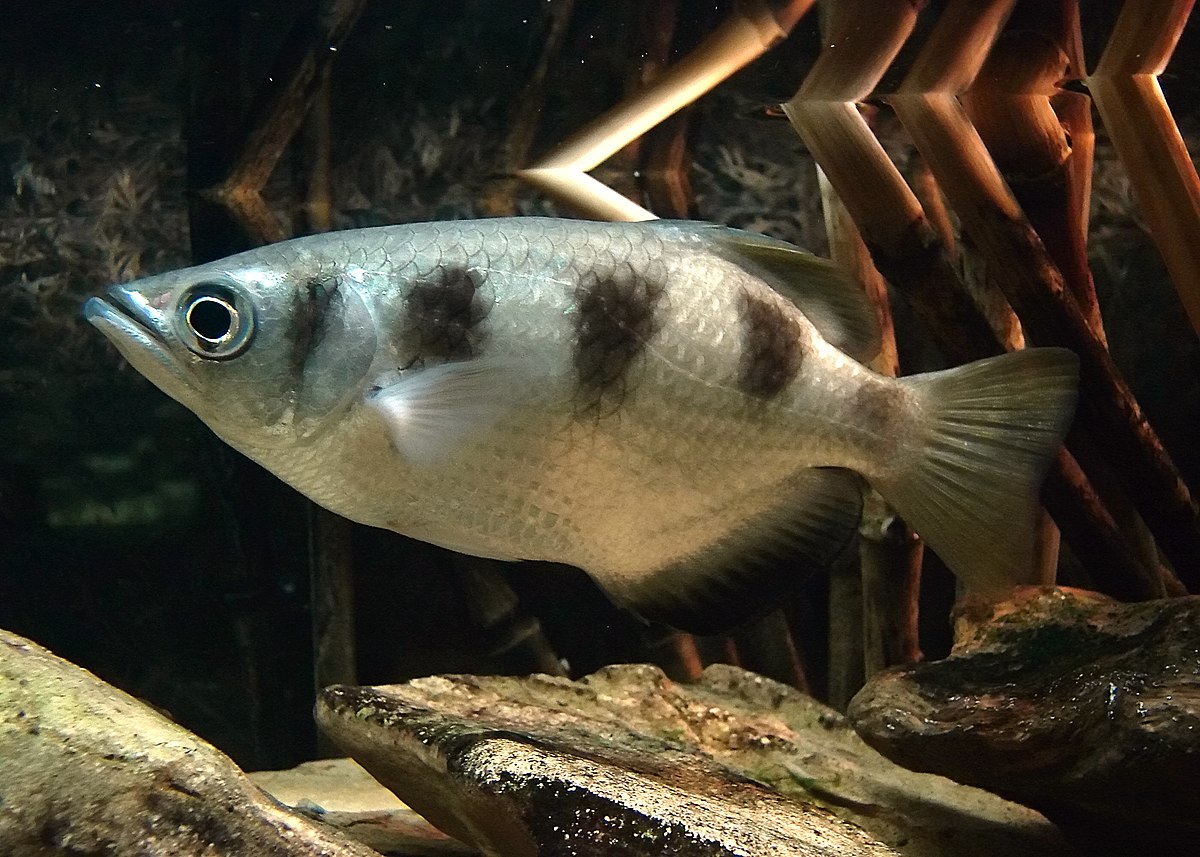
Toxotes jaculatrix
Reviewed for accuracy · Last updated Jan 10, 2026, 4:26 PM
Highly intelligent surface-dweller famous for shooting water jets, alert, competitive at feeding, and socially aware.
Brackish
Moderate
Hard
132 gal (500 L)
12 in (30 cm)
8–12 years
Insectivore
Euryhaline
Selecting tank mates for Toxotes jaculatrix requires careful planning due to their surface-oriented lifestyle and competitive feeding behavior.
Archerfish are not overtly aggressive but are assertive and easily stressed by unsuitable companions. Ideal tank mates are similarly sized brackish species that occupy mid or lower water levels, reducing direct competition.
Compatible species include scats, monos, larger brackish gobies, and certain brackish catfish. These fish tolerate similar salinity and temperature ranges and are robust enough to coexist with archerfish activity.
Avoid small fish, as they may be perceived as prey. Very slow or shy species often fail to compete during feeding times and may gradually weaken. Highly aggressive fish should also be avoided, as archerfish are easily intimidated despite their size.
Group dynamics matter. Archerfish are social and should be kept in small groups to reduce stress, but overcrowding must be avoided. Adequate tank size and structured feeding routines help maintain harmony.
A well-planned community allows archerfish to display their natural behaviors without constant competition or stress, resulting in healthier and more engaging specimens.
Monodactylus argenteus
Toxotes jaculatrix is a specialized brackish-water fish known for its unique hunting behavior and demanding care requirements.
In nature, banded archerfish inhabit mangroves, estuaries, and slow-moving coastal rivers. They spend much of their time near the water surface, where they hunt insects by shooting precise jets of water to knock prey into the water. This behavior strongly influences aquarium setup.
A long, wide aquarium with significant surface area is essential. Height is less important than horizontal swimming space and an unobstructed surface. Tight-fitting lids are mandatory, as archerfish are powerful jumpers.
Water should be maintained in stable brackish conditions, with gradual salinity adjustments as the fish mature. Juveniles may tolerate lower salinity, but adults thrive best in consistent brackish water. Strong filtration and excellent oxygenation are required due to their active nature.
Décor should include driftwood, roots, and branches extending above the waterline. These provide perching points and encourage natural hunting behavior. Lighting should be moderate to strong to allow clear visibility for surface feeding.
Because of their intelligence and sensitivity, archerfish respond poorly to neglect or unstable conditions. They are best kept by aquarists with experience in brackish systems and large aquariums.
Toxotes jaculatrix is primarily an insectivore with highly specialized feeding behavior.
In the wild, archerfish feed on insects and small arthropods that land on overhanging vegetation. They supplement this diet with small crustaceans and occasional fish. Captive diets must respect this natural preference to maintain health and behavior.
Live insects such as crickets, flies, and mealworms are ideal and strongly stimulate natural hunting responses. These can be offered from above the tank to encourage water-shooting behavior. Frozen foods like bloodworms, mysis shrimp, and chopped prawns are also accepted.
Some individuals can be trained to accept high-quality floating pellets, but this should not replace live or frozen foods entirely. Dietary variety is crucial to prevent nutritional deficiencies.
Feeding should occur once or twice daily, with careful portion control. Archerfish are aggressive surface feeders and can easily overeat if food is constantly available.
Proper feeding not only sustains physical health but also provides mental stimulation, making diet management one of the most important aspects of archerfish care.
Breeding Toxotes jaculatrix in home aquariums is extremely uncommon and generally unsuccessful.
In the wild, spawning is believed to occur in higher salinity or fully marine environments, often triggered by seasonal changes and environmental cues that are difficult to reproduce in captivity.
Sexual dimorphism is subtle, and identifying mature breeding pairs is challenging. Even when adult groups are maintained long term, spawning behavior is rarely observed.
Eggs, if produced, are pelagic and require marine conditions to develop properly. The larval stage is delicate and demands specialized live foods and precise water quality control.
Due to these challenges, nearly all archerfish in the aquarium trade are wild-caught or bred in specialized facilities with access to marine systems.
For aquarists, breeding should not be considered a realistic goal. Focus should instead be on providing a stimulating environment that allows natural hunting behavior and long-term health.
Some links on this page may earn Fishmetry a commission at no extra cost to you.