
Easy
Molly
Poecilia sphenops

Monodactylus argenteus
Reviewed for accuracy · Last updated Jan 10, 2026, 4:47 AM
Highly social schooling fish that is peaceful but easily stressed, requiring space, stable water and groups.
Marine
Peaceful
Hard
79 gal (300 L)
10 in (26 cm)
8–15 years
Omnivore
Euryhaline
Selecting compatible tank mates for Monodactylus argenteus requires understanding both its peaceful nature and its environmental needs. Silver Moonies are non-aggressive schooling fish that rely on numbers for security, and they thrive best when kept with other calm, similarly sized species adapted to brackish or marine environments.
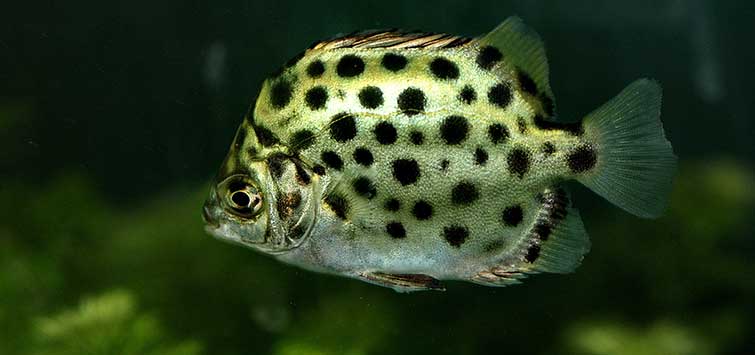
Ideal companions include other brackish-tolerant schooling fish such as scats, monos of the same species, large mollies adapted to saltwater, and certain brackish gobies. These fish share similar salinity requirements and activity levels, reducing stress and competition. Keeping tank mates that occupy different swimming zones further improves compatibility.
Small fish are unsuitable, as adult Silver Moonies may consume them opportunistically once they reach full size. Likewise, aggressive or highly territorial species should be avoided, as Moonies are easily intimidated and may stop feeding under constant pressure.
Slow-moving or delicate species are poor choices, especially in higher salinity systems where environmental stress already plays a role. Fin-nipping species can also cause significant issues, as Silver Moonies have tall, disc-shaped bodies that make them vulnerable to repeated harassment.
Mixing with purely freshwater species is strongly discouraged due to long-term salinity incompatibility. Even if short-term coexistence appears successful, mismatched environmental needs inevitably lead to health problems. When planned carefully, a brackish or marine community centered around Silver Moonies can be highly active, visually striking, and stable.
Poecilia sphenops
Scatophagus argus
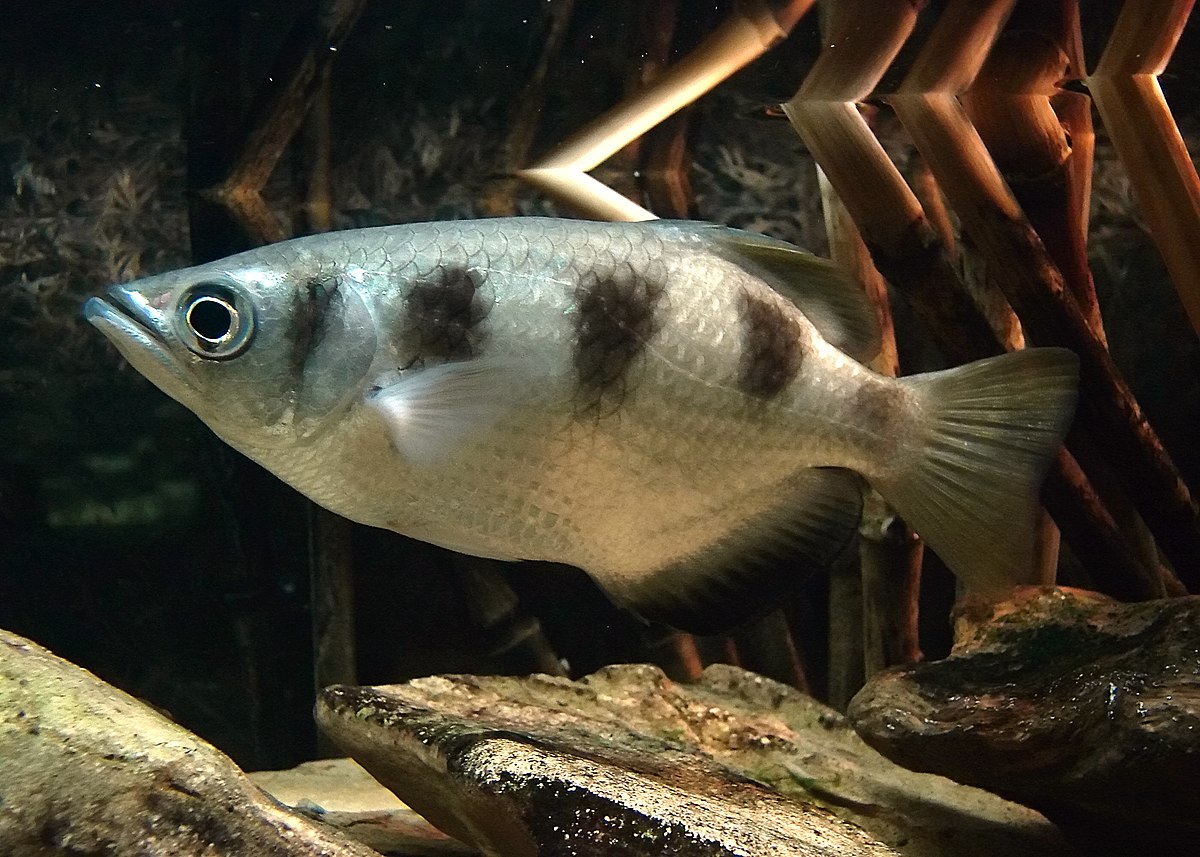
Toxotes jaculatrix
The Silver Moony, Monodactylus argenteus, is a euryhaline species naturally found in coastal regions of the Indo-Pacific, including estuaries, mangroves, river mouths, and nearshore marine waters. Juveniles are commonly encountered in brackish environments, while adults gradually migrate toward full marine conditions. This natural life cycle makes proper salinity management one of the most critical aspects of long-term care in aquariums.
A spacious aquarium is essential, as this species grows large, remains constantly active, and must be kept in groups to avoid chronic stress. Long tanks with open swimming areas are strongly preferred over tall or cluttered layouts. While decorative elements such as rocks or driftwood may be used sparingly, excessive obstructions can interfere with schooling behavior and increase anxiety.
Water quality must be pristine. Silver Moonies are sensitive to ammonia, nitrite, and rapid parameter swings, especially salinity changes. Gradual acclimation and slow salinity adjustments are mandatory. Strong filtration, high oxygenation, and consistent water changes are required to support their high activity level and heavy bioload.
Lighting can be moderate to strong, simulating shallow coastal waters. Substrate choice is largely aesthetic, as this species spends most of its time in mid-water zones. Fine sand is often preferred for a natural appearance and ease of maintenance.
Although juveniles may tolerate lower salinity, keeping adults in freshwater long-term leads to weakened immunity, poor growth, and reduced lifespan. For optimal health, mature individuals should be maintained in brackish to marine conditions. This species is best suited for advanced aquarists who can manage salinity, space, and group dynamics consistently over many years.
In the wild, the Silver Moony is often observed schooling alongside species like the Scat, gaining safety in numbers against predators.
The highly reflective body of the Silver Moony helps confuse predators, especially when mixed with fast-moving fish such as the Archerfish in shared habitats.
In the wild, Monodactylus argenteus feeds on a varied omnivorous diet that includes algae, small crustaceans, plankton, plant matter, and organic debris. Replicating this diversity in captivity is essential for proper growth, coloration, and immune function. A monotonous or protein-heavy diet often results in nutritional deficiencies and digestive issues.
High-quality omnivorous flakes and pellets formulated for brackish or marine fish should serve as a dietary base. These should be supplemented regularly with frozen or fresh foods such as mysis shrimp, brine shrimp, finely chopped seafood, and krill. Plant-based components are equally important and may include spirulina flakes, algae wafers, and blanched vegetables like spinach or zucchini.
Silver Moonies are enthusiastic feeders and should be fed multiple small meals per day rather than one large feeding. This approach mirrors their natural grazing behavior and reduces waste accumulation. Uneaten food should be removed promptly to maintain water quality, especially in higher salinity systems where organic breakdown can be rapid.
As schooling fish, they feed more confidently in groups. Isolated individuals often display reduced appetite and chronic stress. Observing feeding behavior is important, as dominant tank mates may outcompete them if food distribution is not managed properly.
A balanced diet not only supports physical health but also reinforces stable social behavior and reduces stress-related illness. Consistency, variety, and moderation are the keys to long-term success with this species.
Young Silver Moony display darker vertical bars that fade with age, a trait believed to provide camouflage during vulnerable juvenile stages.
The Silver Moony naturally migrates between freshwater and brackish coastal zones, a flexibility that allows it to exploit estuaries where few fish thrive.
Breeding Monodactylus argenteus in home aquariums is extremely rare and largely undocumented under hobbyist conditions. In nature, this species follows a migratory reproductive cycle, with spawning believed to occur in marine environments after juveniles mature in brackish or estuarine waters. These complex environmental triggers are difficult to replicate in captivity.
Sexual dimorphism is minimal, making it challenging to identify males and females without internal examination or spawning behavior. No reliable external markers are consistently reported, further complicating breeding attempts in aquariums.
Commercial breeding of Silver Moonies is uncommon, and most individuals in the aquarium trade are wild-caught juveniles from estuarine regions. Successful reproduction likely requires large-scale marine systems, seasonal parameter shifts, and possibly hormonal cues that are not feasible for most aquarists.
Because of these limitations, hobbyists should not attempt to breed this species and instead focus on providing optimal long-term care. Stable salinity, excellent water quality, proper group size, and a varied diet will allow the fish to reach its full lifespan and display natural schooling behavior.
Aquarists interested in breeding projects are encouraged to explore other brackish species with documented captive breeding success. Silver Moonies are best appreciated as display and community fish rather than breeding candidates.
Some links on this page may earn Fishmetry a commission at no extra cost to you.
What tank size is required for Silver Moony?
Silver Moony requires a large aquarium due to its active swimming behavior and adult size. A minimum tank size of 75 gallons is recommended for juveniles, while adults are best maintained in aquariums of 125 gallons or larger. Adequate horizontal swimming space is essential to reduce stress and support natural schooling movement.
Is Silver Moony a schooling fish?
Silver Moony is a true schooling species and should be kept in groups of at least five individuals. Keeping a single specimen often leads to chronic stress and abnormal behavior. In properly sized groups, Silver Moony displays coordinated swimming and stable social interactions.
What water conditions are best for Silver Moony care?
Silver Moony thrives in brackish water as it matures, although juveniles may tolerate freshwater temporarily. Stable salinity, good filtration, and consistent water parameters are critical for long-term health. Sudden changes in salinity or poor water quality can quickly cause stress-related illness in Silver Moony.
What does Silver Moony eat in captivity?
Silver Moony is an omnivore with a strong preference for algae-based foods and small invertebrates. A balanced diet should include vegetable matter, high-quality prepared foods, and occasional frozen or live offerings. Proper diet management helps prevent nutritional deficiencies and supports steady growth in Silver Moony.
Is Silver Moony aggressive or peaceful in aquariums?
Silver Moony is generally peaceful but can become fin-nippy if kept in insufficient numbers or cramped tanks. Aggression is usually stress-related rather than territorial. When housed correctly, Silver Moony coexists calmly with similarly sized brackish species.
What are the best tank mates for Silver Moony?
Silver Moony is compatible with robust brackish species such as Scat and Archerfish. Tank mates should share similar water requirements and be large enough to avoid harassment. Mixing Silver Moony with small or slow fish often leads to stress or injury.