
Ammonia Spikes vs Bacterial Blooms in Aquariums
Learn how to identify ammonia spikes and bacterial blooms, understand their risks, and prevent these common aquarium water quality issues.

By Fishmetry Team
5 min read
Published at Jan 4, 2026, 7:01 PM
Reviewed for accuracy · Last updated Jan 5, 2026, 2:25 AM
Aquarium water problems can develop quickly and often look similar at first, especially to new aquarists. Two of the most commonly confused issues are ammonia spikes and bacterial blooms. While both are related to waste management and biological balance, their risks and solutions differ significantly. Understanding how to tell them apart is essential for maintaining healthy fish and stable aquarium conditions.
The Nitrogen Cycle and Aquarium Stability
Every aquarium depends on the nitrogen cycle to safely process waste. Fish excrete ammonia through respiration and waste, while uneaten food and decaying organic matter add to the load. Beneficial bacteria convert ammonia into nitrite, and then into nitrate, which is removed through water changes or absorbed by plants.
A stable nitrogen cycle is the foundation of ethical and responsible fishkeeping.
When this cycle is incomplete or disrupted, water quality issues such as ammonia spikes or bacterial blooms are likely to occur.
What Is an Ammonia Spike?
An ammonia spike happens when ammonia builds up faster than beneficial bacteria can process it. This is one of the most dangerous situations in an aquarium.
Common Causes of Ammonia Spikes
- Uncycled or newly set up aquariums
- Overstocking or adding fish too quickly
- Overfeeding
- Insufficient biological filtration
- Dead fish, plants, or invertebrates left in the tank
Why Ammonia Is Harmful
Ammonia is highly toxic to fish and invertebrates, even at low concentrations. It damages gill tissue, interferes with oxygen exchange, and causes severe stress.
Typical Signs of Ammonia Poisoning
- Fish gasping at the surface
- Red or inflamed gills
- Lethargy or erratic swimming
- Loss of appetite
Ammonia spikes require immediate action to prevent serious injury or death.
What Is a Bacterial Bloom?
A bacterial bloom is a rapid increase in free-floating bacteria, usually causing cloudy or milky-looking water. These bacteria feed on excess organic matter rather than directly harming fish.
Common Causes of Bacterial Blooms
- Newly established aquariums
- Overfeeding
- Sudden increase in organic waste
- Recently disturbed filter media
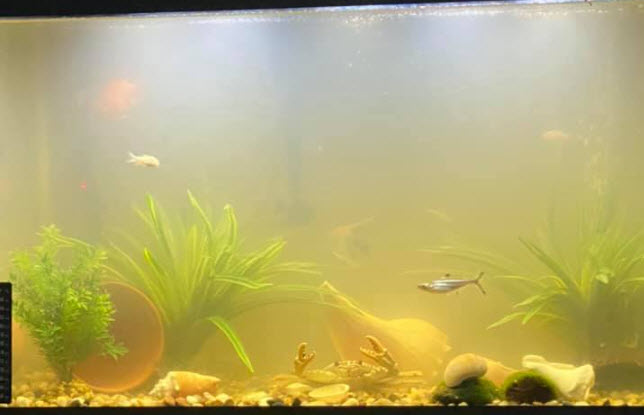
Cloudy aquarium water caused by a bacterial bloom
Are Bacterial Blooms Dangerous?
In most cases, bacterial blooms are not directly harmful. They are often temporary and resolve on their own as the aquarium stabilizes. However, severe blooms can reduce oxygen levels, especially in tanks with poor circulation.
Ammonia Spike vs Bacterial Bloom: Key Differences
| Aspect | Ammonia Spike | Bacterial Bloom |
|---|---|---|
| Water appearance | Usually clear | Cloudy or milky |
| Primary risk | Highly toxic to fish | Usually low risk |
| Main cause | Nitrogen cycle imbalance | Excess organic matter |
| Detection | Water testing kits | Visual observation |
| Urgency | Immediate action needed | Often self-resolving |
Which Issue Is More Detrimental?
Ammonia spikes are significantly more dangerous than bacterial blooms. Elevated ammonia can kill fish quickly if not addressed. Bacterial blooms are typically a sign of an aquarium adjusting rather than an immediate threat.
How to Prevent Ammonia Spikes
Support the Nitrogen Cycle
- Fully cycle the aquarium before adding fish
- Add livestock gradually
- Avoid rinsing filter media with untreated tap water
Practice Responsible Feeding
- Feed only what fish can consume in a few minutes
- Remove uneaten food promptly
Monitor Water Parameters
How to Prevent Bacterial Blooms
- Avoid overfeeding and overstocking
- Maintain consistent cleaning routines
- Ensure proper filtration and water movement
- Allow new aquariums time to stabilize naturally
Ethical Aquarium Management
Responsible aquarism focuses on prevention rather than quick fixes. Avoid unnecessary chemical treatments and prioritize biological balance. Stable water parameters reduce stress, support natural behavior, and improve long-term animal welfare.
Final Thoughts
Being able to differentiate between ammonia spikes and bacterial blooms helps aquarists respond correctly and avoid panic-driven decisions. Regular testing, patience, and ethical maintenance practices are the most effective tools for keeping aquariums healthy and stable.