Pro
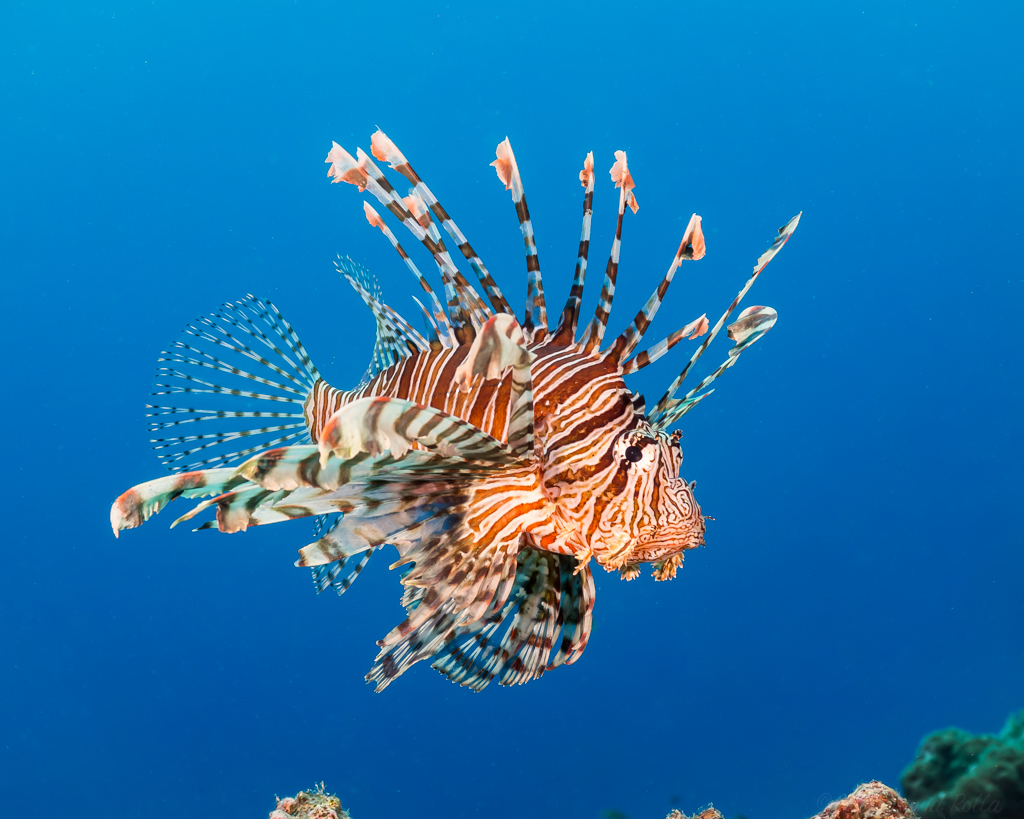
Red Lionfish
Pterois volitans

Gymnomuraena zebra
Reviewed for accuracy · Last updated Jan 20, 2026, 12:16 AM
A powerful but calm moray that spends daylight hours hidden and emerges slowly to forage using scent rather than speed.
Marine
Aggressive
Pro
159 gal (600 L)
59 in (150 cm)
20–30 years
Carnivore
Resident
Despite its intimidating size, the Zebra Moray is generally less aggressive than many other moray species, though it remains a predator. Its feeding specialization focuses on hard-shelled invertebrates rather than fish, reducing the likelihood of fish predation compared to more piscivorous morays. However, any small or slow-moving fish may still be at risk, particularly during nighttime activity.
Ideal tank mates are large, confident marine fish that are incompatible as prey due to size or body shape. Large tangs, angelfish, groupers, and robust wrasses can coexist when sufficient space is provided. Tank mates should not harass the eel or attempt to enter its shelter, as defensive bites can occur. Invertebrates such as crabs, shrimp, and lobsters should be avoided entirely, as they will be consumed.
The aquarium should be arranged to minimize territorial overlap, with multiple caves scaled appropriately for the eel’s size. Feeding routines should ensure the moray is adequately nourished to reduce opportunistic behavior. When housed in a properly sized system with compatible species, Gymnomuraena zebra can function as a calm centerpiece predator rather than a disruptive presence.
Pterois volitans

Zebrasoma flavescens
The Zebra Moray is one of the largest and most visually striking moray eels kept in marine aquariums, requiring substantial planning and space. Gymnomuraena zebra demands a very large aquarium with a wide footprint to accommodate its thick body and limited flexibility. Vertical height is less important than horizontal swimming and turning space. Rock structures must be extremely stable and anchored, as this eel can dislodge poorly secured formations through sheer mass.
Water parameters must remain consistently within marine reef standards, with excellent oxygenation and minimal nitrogenous waste. Due to its size and feeding habits, this species produces a heavy bioload, necessitating oversized filtration systems. Large protein skimmers, refugiums, and frequent water changes are essential components of proper care. Flow should be moderate, avoiding direct strong currents in resting areas while maintaining overall circulation.
Lighting requirements are minimal from the eel’s perspective, but shaded caves and deep recesses are mandatory to replicate its natural habitat. Tank covers must be extremely secure, as Zebra Morays are capable of exerting significant force when exploring. Given its long lifespan and eventual adult size, this species should only be kept by experienced aquarists with permanent, dedicated systems designed for large predatory fish.
The Zebra Moray has a highly specialized diet centered on crushing crustaceans and mollusks. Its blunt dentition is adapted for breaking shells rather than grasping fish, and this should guide captive feeding strategies. Primary food items should include whole or chopped crabs, shrimp with shells, mussels, clams, and other marine invertebrates. Occasional fish flesh may be offered, but it should not form the dietary core.
Feeding should occur two times per week for adult specimens, with portion sizes appropriate to body mass. Overfeeding can lead to fatty degeneration and water quality problems, while insufficient feeding may cause lethargy and nutritional stress. Food should be presented using long feeding tools to prevent accidental bites and to condition the eel to associate tools rather than hands with feeding.
Supplementation with marine vitamins and occasional iodine support overall health and skin condition. Consistency and dietary variety are key to maintaining long-term vitality in this slow-metabolism species. A well-managed feeding regimen contributes significantly to the Zebra Moray’s reputation as a hardy yet demanding aquarium inhabitant.
Captive breeding of the Zebra Moray is virtually unknown, with no reliable reports of successful reproduction in home or public aquariums. In the wild, Gymnomuraena zebra participates in broadcast spawning, releasing eggs into the open ocean where fertilization and larval development occur. The resulting leptocephalus larvae require vast pelagic environments and specific planktonic food sources.
Sex identification is extremely challenging, as external morphological differences between males and females are negligible. Even in large public aquaria housing multiple individuals, natural spawning behaviors are rarely observed. Environmental cues such as seasonal temperature variation, photoperiod changes, and oceanic current simulation are believed to influence reproduction but remain impractical to replicate fully.
As a result, all Zebra Morays in the aquarium trade are wild-caught. Prospective keepers should prioritize ethical sourcing and be aware of the long-term commitment involved. Rather than pursuing breeding, aquarists should focus on maintaining optimal environmental conditions that support the eel’s extended lifespan and natural behaviors.
Some links on this page may earn Fishmetry a commission at no extra cost to you.