Pro
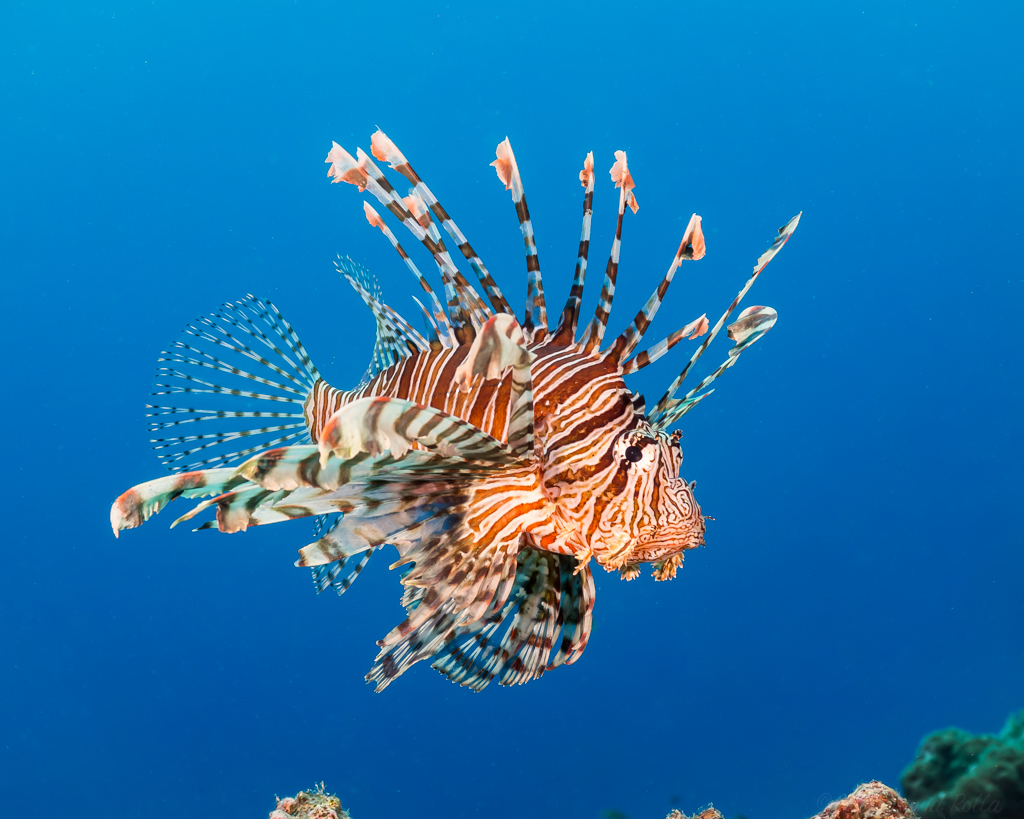
Red Lionfish
Pterois volitans
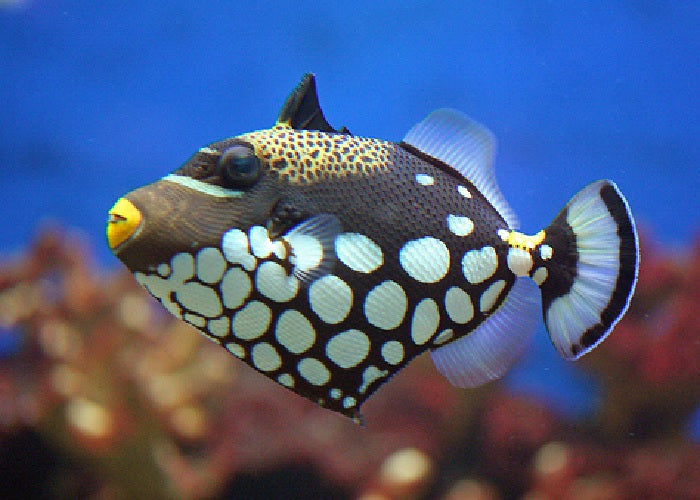
Balistoides conspicillum
Reviewed for accuracy · Last updated Jan 12, 2026, 11:51 PM
Extremely territorial and intelligent predator that becomes highly aggressive with age and dominates most tank environments.
Marine
Very Aggressive
Pro
185 gal (700 L)
20 in (50 cm)
15–25 years
Carnivore
Resident
Tank mate selection for the Clown Triggerfish is extremely limited due to its aggressive and territorial nature. Most community fish, invertebrates, and corals are incompatible and will be attacked or consumed.
Suitable tank mates, if any, include other large, equally aggressive predators such as large groupers, moray eels, or similarly sized triggerfish, and only in very large systems. Even then, compatibility is never guaranteed.
Introducing tank mates simultaneously and providing ample space may reduce immediate aggression, but long-term coexistence remains unpredictable. This species often becomes more aggressive with age.
Invertebrates are universally unsafe, as the Clown Triggerfish actively preys on crustaceans and mollusks. Species-only or carefully planned predator-only systems are the most ethical and successful approach.
Pterois volitans

Pterois miles

Pterois antennata
The Clown Triggerfish is a powerful and highly aggressive marine predator that requires an exceptionally large and robust aquarium system. A minimum tank size of 700 liters is required, though larger systems are strongly recommended to manage aggression and provide adequate swimming space. This species grows large and possesses immense jaw strength, necessitating durable tank construction and secure aquascaping.
Aquascaping should emphasize open swimming areas combined with large, immovable rock structures. Rocks must be firmly secured, as this species is known to rearrange décor. Filtration must be oversized, as carnivorous feeding produces heavy waste loads. Strong protein skimming and frequent water changes are mandatory.
Water flow should be moderate to strong, ensuring high oxygenation. Lighting requirements are flexible, as this species is not reef-dependent. Fish-only systems are strongly recommended due to the Clown Triggerfish’s destructive tendencies.
This species is best suited for experienced aquarists capable of managing extreme aggression and long-term growth. When housed properly, Balistoides conspicillum becomes an intelligent, interactive, and long-lived centerpiece predator.
Balistoides conspicillum is a strict carnivore that feeds on hard-shelled invertebrates and fish in the wild. In captivity, a varied, protein-rich diet is essential for health and dental maintenance.
Foods should include shrimp, squid, clams, mussels, and marine fish flesh. Hard-shelled foods are particularly important to prevent overgrowth of the teeth, which can lead to feeding difficulties.
Feeding should occur several times per week, with portion control to avoid obesity and water quality degradation. Overfeeding is a common issue due to this species’ aggressive feeding response.
Vitamin supplementation is recommended to prevent nutritional deficiencies. A varied diet ensures proper growth, coloration, and long-term vitality.
Breeding the Clown Triggerfish in captivity is extremely rare and largely undocumented in private aquaria. In the wild, this species exhibits complex courtship and nesting behaviors, often involving aggressive territorial defense.
Reproduction requires expansive territories, specific environmental cues, and social dynamics that cannot be realistically replicated in aquarium systems. Sexual dimorphism is minimal, complicating pair identification.
Eggs are typically laid in protected nests and guarded aggressively. Larval rearing presents immense challenges due to planktonic requirements and long developmental stages.
As a result, virtually all Clown Triggerfish in the trade are wild-caught. Breeding remains an advanced research topic rather than a practical aquarist goal.
Some links on this page may earn Fishmetry a commission at no extra cost to you.