Medium
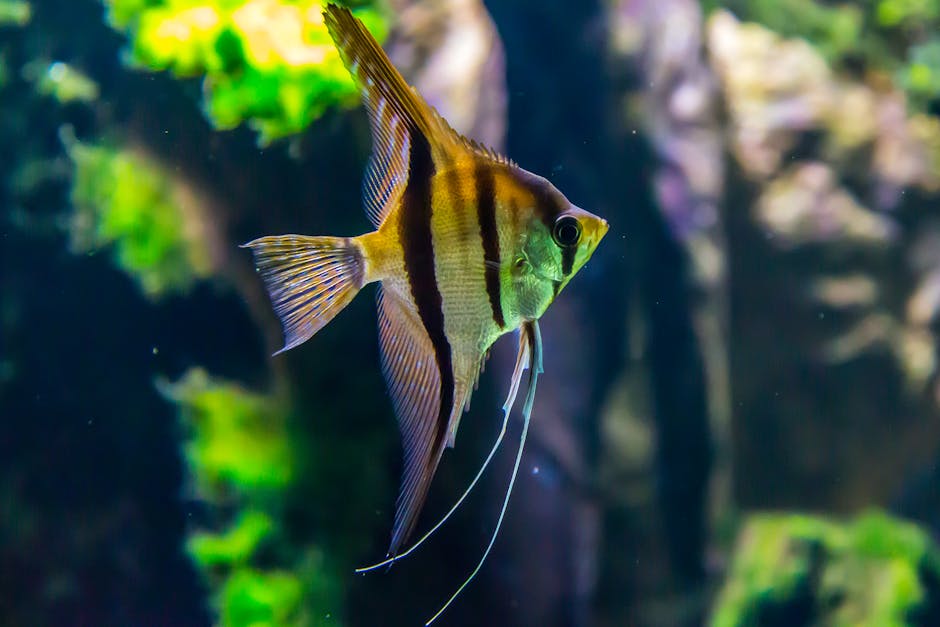
Angelfish
Pterophyllum scalare
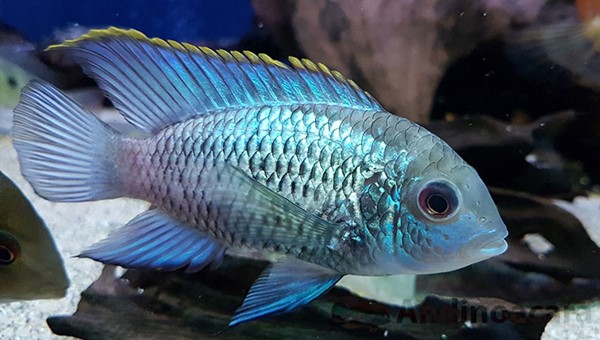
Andinoacara pulcher
Reviewed for accuracy · Last updated Jan 22, 2026, 2:26 AM
Generally calm cichlid that becomes territorial during breeding but remains manageable in well-sized community aquariums.
Freshwater
Moderate
Easy
53 gal (200 L)
8 in (20 cm)
8–12 years
Omnivore
Resident
Blue Acaras are generally peaceful for cichlids and can coexist with a wide range of compatible species when housed in appropriately sized aquariums. Ideal tank mates include medium to large characins, peaceful barbs, larger tetras, and robust livebearers. Bottom dwellers such as Corydoras, plecos, and other non-aggressive catfish usually coexist without issues.
Care must be taken during breeding periods, as territorial behavior increases significantly. During this time, tank mates should have ample space and hiding spots to avoid conflict. Keeping Blue Acaras with overly aggressive cichlids is not recommended, as they may be bullied or stressed.
Very small fish and shrimp are poor choices, as they may be viewed as food. Fin-nipping species should also be avoided, as they can damage the Acara’s fins and cause stress. When kept as a bonded pair, aggression is usually directed outward rather than between partners.
Community compatibility improves dramatically with larger tanks, visual barriers, and thoughtful stocking. In such setups, Blue Acaras are calm, confident fish that integrate well into diverse freshwater communities.
Pterophyllum scalare

Devario aequipinnatus

Hyphessobrycon anisitsi
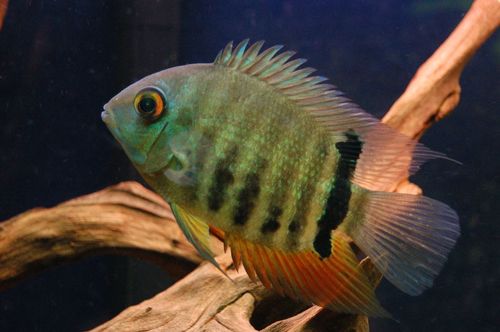
Heros severus
Blue Acara are among the most adaptable and forgiving medium-sized cichlids available in the aquarium hobby, making them suitable for beginners with adequate tank space. A minimum of 200 liters is recommended for a pair, with larger volumes providing more stable water conditions and reduced territorial stress. These fish appreciate open swimming areas combined with structured décor such as rocks, driftwood, and caves.
Substrate can be sand or fine gravel, as Blue Acaras enjoy mild digging behavior, especially during breeding. Plants can be used, but they should be robust species or well-anchored, as occasional uprooting may occur. Filtration should be efficient, as cichlids produce a moderate bioload, but water flow should not be excessively strong.
Water parameters are flexible compared to many South American cichlids. They tolerate a broad pH and hardness range, though stability remains important. Regular weekly water changes of 25–30% help maintain water quality and coloration. Blue Acaras are tolerant of standard tropical temperatures and are less sensitive to minor fluctuations.
Lighting does not need to be subdued, and these fish display their best coloration under moderate light. Overall, their resilience, calm demeanor, and attractive appearance make them excellent centerpiece fish for community or semi-community aquariums.
The Blue Acara is one of the few cichlids that can coexist with the highly territorial Convict Cichlid under spacious conditions. This tolerance makes it popular in mixed Central and South American cichlid aquariums.
In the wild, the presence of healthy Blue Acara populations often indicates stable water quality and balanced ecosystems. Their sensitivity to pollution mirrors patterns seen in species such as the Angelfish.
Blue Acaras are opportunistic omnivores with a strong preference for protein-rich foods. In the wild, they consume insects, small crustaceans, worms, and plant matter. In captivity, they readily accept a wide variety of foods, making them easy to feed and maintain.
A high-quality cichlid pellet or granule should serve as the dietary base, supplemented regularly with frozen or live foods such as bloodworms, brine shrimp, mysis shrimp, and chopped earthworms. Occasional vegetable matter, including blanched spinach or spirulina-based foods, helps provide dietary balance.
Feeding should occur once or twice daily, offering only what the fish can consume within a few minutes. Overfeeding leads to obesity and water quality issues, so portion control is important. During breeding, increased protein intake supports egg production and parental care.
Their enthusiastic feeding response makes monitoring appetite easy. A sudden loss of interest in food often indicates stress or water quality issues. Consistent variety and moderation ensure long-term health and vibrant coloration.
The Blue Acara forms strong monogamous pairs and both parents actively guard eggs and fry, a trait shared with species like the Firemouth Cichlid. This cooperative behavior increases offspring survival in both wild and captive environments.
Although closely related to the Green Terror, the Blue Acara is significantly less aggressive. This genetic relationship highlights how small evolutionary differences can strongly influence temperament.
Blue Acaras are among the easier cichlids to breed in captivity and often form strong monogamous pairs. Breeding usually occurs spontaneously once fish reach maturity and are maintained in good conditions. A flat stone, piece of slate, or smooth driftwood surface is typically chosen as the spawning site.
During courtship, colors intensify and the pair becomes more territorial. The female lays several hundred eggs, which are fertilized and guarded by both parents. Eggs hatch within two to three days, and fry become free-swimming after approximately one week.
Parental care is strong, with both adults actively defending the fry and guiding them around the tank. Fry can be fed newly hatched brine shrimp and finely crushed flake food. Frequent small water changes support healthy growth.
Because of their reliable breeding behavior and attentive parenting, Blue Acaras are often recommended to aquarists interested in observing natural cichlid reproduction without extreme difficulty.
Some links on this page may earn Fishmetry a commission at no extra cost to you.
What is the ideal tank size and setup for Blue Acara?
The ideal tank size for Blue Acara is at least 30 gallons for a single adult, with larger volumes recommended for pairs or community setups. A spacious footprint, stable filtration, soft to moderately hard water, and temperatures between 23–27°C support long-term health. Substrate should allow light digging, and decor such as rocks and driftwood helps reduce stress and territorial disputes.
Is Blue Acara aggressive or peaceful in aquarium environments?
Blue Acara displays generally peaceful behavior compared to many cichlids, though mild territoriality can appear during breeding. Outside of spawning periods, it is calm and predictable, making it suitable for semi-peaceful community tanks when adequate space and visual barriers are provided.
What do Blue Acara eat in captivity?
The diet of Blue Acara should be omnivorous and protein-balanced. High-quality cichlid pellets can serve as a staple, supplemented with frozen or live foods such as brine shrimp and bloodworms, along with occasional plant-based matter. Dietary variety supports coloration, immune response, and digestion.
Can Blue Acara live in community tanks with other fish?
Blue Acara is compatible with similarly sized, calm to moderately assertive species. Suitable tank mates include Firemouth Cichlid, Angelfish, and Corydoras Catfish. Very aggressive or significantly smaller fish should be avoided to prevent stress or predation.
Does Blue Acara need to be kept in pairs or groups?
Blue Acara does not school and is best kept singly or as a bonded pair. Keeping multiple adults together requires a large tank with defined territories, as overcrowding can lead to persistent dominance behavior and stress.
Is Blue Acara compatible with Convict Cichlid in the same aquarium?
Blue Acara can coexist with Convict Cichlid only in large aquariums with ample space and structure. While both species are hardy, Convict Cichlid tends to be more aggressive, especially during breeding, which can lead to conflicts in smaller or poorly structured tanks.