

Easy
Chili Rasbora
Boraras brigittae

Microdevario kubotai
Reviewed for accuracy · Last updated Jan 2, 2026, 7:32 PM
Tiny schooling cyprinid that stays calm and cohesive, showing subtle hierarchy without aggression.
Freshwater
Very Peaceful
Easy
11 gal (40 L)
1 in (2.3 cm)
4–6 years
Omnivore
Resident
Green Kubotai Rasboras are best kept with other very peaceful nano species. Small tetras and other rasboras make excellent companions in community tanks. Their calm nature means they rarely compete aggressively for space.
Bottom dwellers like dwarf Corydoras and Otocinclus are suitable additions. These species occupy different tank levels and minimize interaction stress. Peaceful shrimp can coexist as long as plenty of cover is provided.
Avoid larger or boisterous fish that may intimidate or outcompete them. Fin nippers and aggressive species should be strictly avoided. A species only setup can highlight their schooling displays.
Keeping them in groups of eight or more improves confidence. Larger schools show tighter formation and richer coloration. Tank mates should share similar water parameter preferences.
Boraras brigittae

Celestichthys margaritatus

Iriatherina werneri
Pseudomugil furcatus
Green Kubotai Rasboras thrive in well planted aquariums with gentle flow and stable conditions. Dense vegetation provides security and enhances their neon green coloration under proper lighting. Open swimming areas should be balanced with cover to support natural schooling behavior.
Soft slightly acidic water closely matches their native streams and helps reduce stress. Consistent parameters are more important than chasing exact numbers for long term health. Regular small water changes maintain clarity and prevent sudden parameter swings.
Subdued lighting with floating plants creates a calm environment they prefer. Dark substrates improve contrast and make the fish appear more vibrant. Avoid strong currents as these fish are adapted to slow moving waters.
A tight fitting lid is recommended as active schooling can lead to occasional jumping. Stable temperatures within the mid tropical range support immune function. A mature cycled aquarium ensures biofilm and microfauna availability.
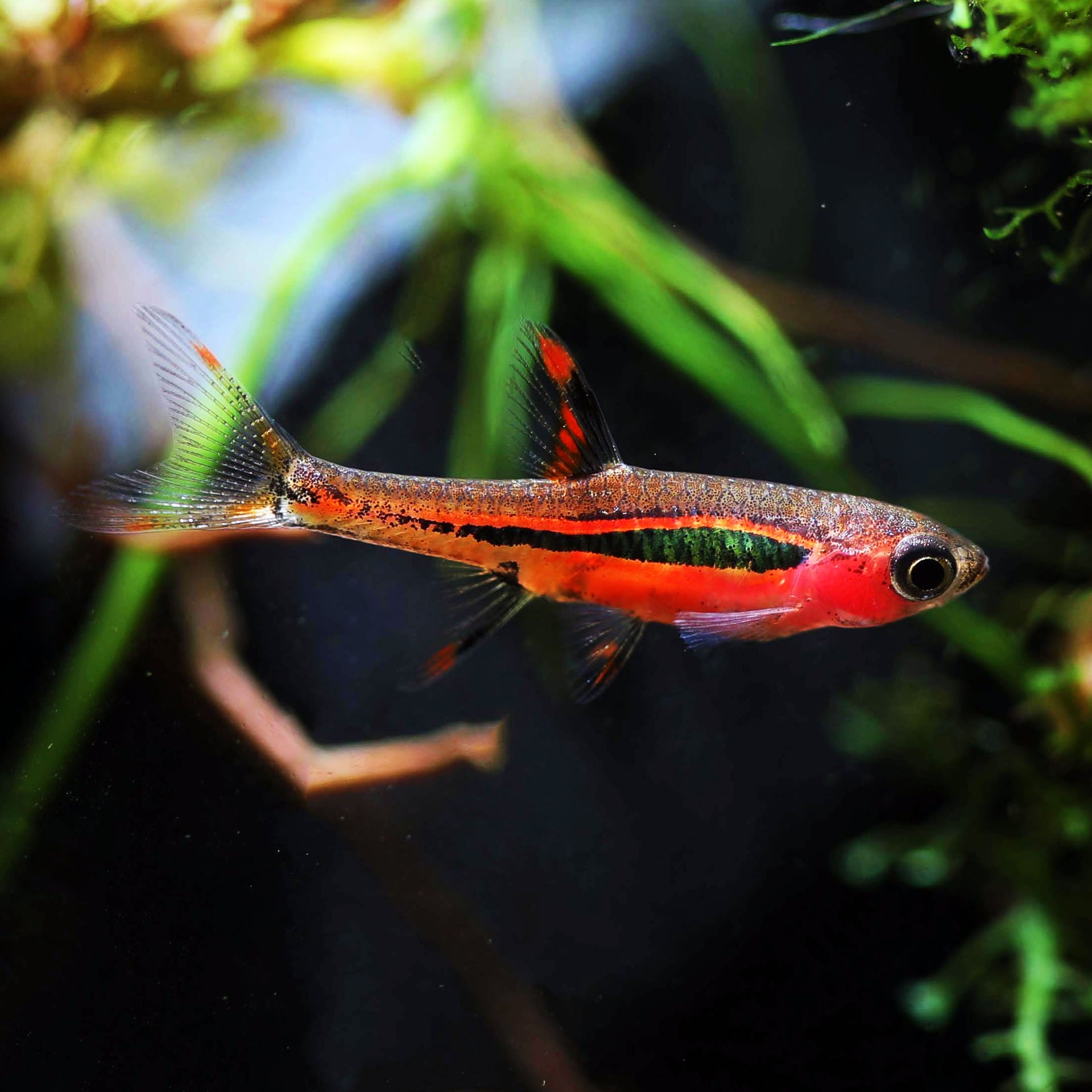
The Green Kubotai Rasbora is known for forming tight, shimmering schools in aquariums, making them both peaceful and visually striking companions.
The Green Kubotai Rasbora is one of the few naturally neon-green fish in the world, possessing a brilliant metallic shimmer that helps it stay visible to its school in the shaded streams of Thailand.
In the wild Microdevario kubotai feeds on small invertebrates and drifting plant matter. In captivity they readily accept a wide range of high quality prepared foods. Fine crushed flakes and micro pellets work well for their small mouths.
Supplementing with frozen foods like daphnia and cyclops enhances color and vitality. Live foods can be offered occasionally to stimulate natural foraging behavior. Feed small portions to avoid waste and maintain excellent water quality.
Multiple small meals throughout the day better suit their fast metabolism. Observe the school to ensure timid individuals receive food. A varied diet helps prevent nutritional deficiencies over time.
Avoid oversized foods that sink too quickly beyond their feeding zone. Remove uneaten food promptly to reduce ammonia buildup. Consistent feeding routines keep the school active and visible.
Breeding Microdevario kubotai is possible but requires careful preparation. A separate breeding tank with soft water and fine leaved plants is recommended. Spawning usually occurs among dense vegetation or spawning mops.
Condition adults with live and frozen foods to trigger reproductive behavior. Males display brighter coloration and increased activity during courtship. Females scatter eggs without providing parental care.
After spawning adults should be removed to prevent egg predation. Eggs hatch within a few days depending on temperature. Fry are extremely small and require infusoria or liquid fry food.
Gradually introduce microworms and baby brine shrimp as they grow. Maintain pristine water quality with gentle filtration. Patience is required as growth is slow in early stages.
Some links on this page may earn Fishmetry a commission at no extra cost to you.
What tank size is recommended for Green Kubotai Rasbora care?
A minimum tank size of 10 gallons is suitable for a small group, but larger aquariums provide better stability for Green Kubotai Rasbora. Keeping Green Kubotai Rasbora in densely planted tanks helps reduce stress and supports natural behavior.
How easy is Green Kubotai Rasbora care for beginners?
Green Kubotai Rasbora are considered beginner-friendly when water parameters are kept stable. Regular maintenance and gentle filtration are essential for long-term Green Kubotai Rasbora health.
What behavior can be expected from Green Kubotai Rasbora?
Green Kubotai Rasbora display peaceful, active schooling behavior and spend most of their time in the mid-water column. Stress-related hiding is reduced when Green Kubotai Rasbora are kept in proper group sizes.
What diet is best for Green Kubotai Rasbora?
Green Kubotai Rasbora thrive on finely sized foods such as micro pellets, crushed flakes, and small live or frozen foods. A varied diet supports coloration and overall condition in Green Kubotai Rasbora.
Should Green Kubotai Rasbora be kept in schools?
Green Kubotai Rasbora are schooling fish and should be kept in groups of at least eight individuals. Larger schools promote natural movement and reduce timid behavior in Green Kubotai Rasbora.
Are Green Kubotai Rasbora compatible with other community fish?
Green Kubotai Rasbora are compatible with peaceful species such as Chili Rasbora, Forktail Blue-eye, and Pygmy Corydoras. Avoid aggressive or much larger fish to ensure compatibility with Green Kubotai Rasbora.