
Easy
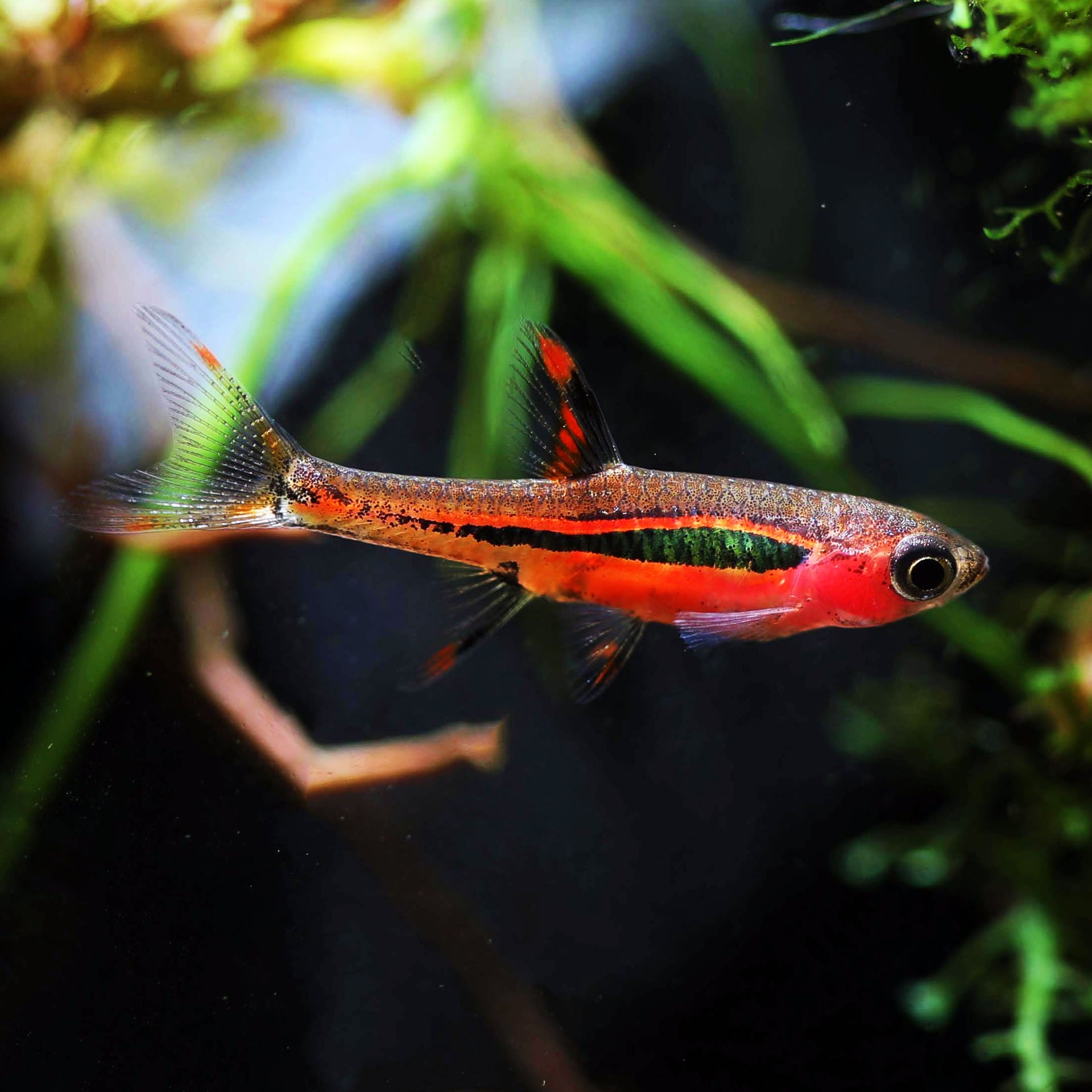
Chili Rasbora
Boraras brigittae

Celestichthys margaritatus
Reviewed for accuracy · Last updated Dec 29, 2025, 6:42 PM
Small, peaceful schooling fish that prefers densely planted tanks and calm water flow. Active in groups, showing more confident and colorful displays when kept in schools of six or more. May nip very long-finned slow-moving species but generally coexists peacefully in a community aquarium.
Freshwater
Peaceful
Easy
11 gal (40 L)
1 in (2.5 cm)
2–4 years
Omnivore
Resident
Choose peaceful, small tankmates that occupy different micro-niches and won't compete aggressively for food. Ideal companions include other small rasboras, small tetras, and micro-characins.
Bottom dwellers like pygmy corydoras and Otocinclus make good tankmates and help with biofilm control. Avoid large, aggressive, or fin-nipping species that may intimidate Galaxy Rasboras.
Shrimp and peaceful snails can coexist if tank vegetation offers hiding places. Keep Galaxy Rasboras in groups of six or more; small shoals become timid and lose color when kept in very small numbers. Distribute micro foods across the tank so smaller fish can access food without competition. Remove any tankmate that repeatedly harasses or chases the rasboras.
Quarantine new additions to prevent disease introduction. Provide space so each species has its preferred swimming zone and hiding spots.
Boraras brigittae

Corydoras pygmaeus

Iriatherina werneri

Celestichthys Erythromicron

Microdevario kubotai
Pseudomugil furcatus
Provide a well-established aquarium with stable water parameters and plenty of plants to mimic the Galaxy Rasbora's native microhabitats. Use fine-leaved plants, mosses, and floating cover to create dimmer light zones and hiding spots. Maintain gentle filtration and low to moderate flow to avoid stressing these tiny fish. Aim for a temperature range of 22–26°C and a slightly acidic to neutral pH around 6.5–7.5.
Perform regular small water changes to keep nitrates low and the environment stable. Monitor ammonia and nitrite closely; these fish are sensitive to spikes in water chemistry. Substrate can be dark sand or fine gravel to show their colors off; add leaf litter or alder cones for tannins. Tannins in moderation are often well tolerated and may enhance coloration. Keep lighting moderate to prevent algae overgrowth while allowing plant growth.
Provide open swimming areas combined with dense planting pockets; they prefer mid-to-top water columns. Avoid aggressive, large, or overly boisterous tankmates that outcompete or stress Galaxy Rasboras. Check for signs of stress such as fading spots or hiding more than usual.
The Galaxy Rasbora was once considered endangered due to overcollection, but captive breeding restored populations.
The Galaxy Rasbora prefers densely planted aquariums, which reduce stress and support natural behavior.
Galaxy Rasboras accept a variety of small foods and are best kept on a varied diet to maintain color and health. Offer high-quality micro-pellets, finely crushed flakes, and sinking granules suitable for small fish.
Supplement with frozen and live foods like daphnia, baby brine shrimp, and microworms to encourage natural foraging. Feed small amounts 2–3 times daily; these fish have tiny mouths and cannot consume large pellets.
Rotate protein and vegetable-based feeds to ensure a balanced intake of nutrients and carotenoids. Observe feeding so dominant individuals do not hog all the food; target-feeding may be necessary in community tanks.
Occasional vegetable matter such as finely blanched spinach or spirulina-based flakes is beneficial. Avoid overfeeding and remove uneaten food promptly to protect water quality.
During conditioning for breeding, increase live/frozen protein feeds and feed slightly more frequently. Maintain excellent water quality during conditioning to improve spawning success.
Male Galaxy Rasbora show brighter colors and red fins, especially during courtship and dominance displays.
The Galaxy Rasbora is a micro-predator that feeds on tiny insects, worms, and zooplankton in nature.
Breeding Galaxy Rasboras is possible with a dedicated, well-planted breeding tank and conditioned adults. Use a shallow, planted tank with fine-leaved plants or spawning mops to collect eggs. Keep water slightly softer and in the lower range of their tolerance to encourage spawning. Condition males and females with frequent small feeds of live and frozen foods.
A temperature increase of 1–2°C and increased partial water changes can trigger spawning. Males display to attract females while pairs scatter adhesive eggs among plants. Remove adults after spawning or use dense planting so adults cannot find and eat eggs or fry. Eggs hatch in 24–36 hours depending on temperature.
Feed fry infusoria or liquid fry food at first, then gradually add baby brine shrimp. Maintain pristine water quality and small, frequent feedings for best survival. Growth is slow at first, so patience and consistent care are key.
Some links on this page may earn Fishmetry a commission at no extra cost to you.
What do Galaxy Rasboras eat?
Galaxy Rasboras are omnivores. In aquariums, they thrive on high-quality micro pellets, crushed flakes, and live or frozen foods such as brine shrimp, daphnia, and bloodworms, which enhance coloration and health.
How many Galaxy Rasboras should be kept together?
Galaxy Rasboras are schooling fish and should be kept in groups of at least 6 to 8 individuals. Larger groups encourage natural behavior, better coloration, and increased confidence.
Are Galaxy Rasboras peaceful community fish?
Yes. Galaxy Rasboras are peaceful and shy fish that do well in calm community aquariums. They should only be kept with small, non-aggressive tank mates, as larger or fast-moving fish can cause stress.
What tank size is recommended for Galaxy Rasboras?
A minimum tank size of 30 liters (8 gallons) is recommended for Galaxy Rasboras. However, larger tanks provide more stable water parameters and space for schooling, which helps reduce stress and improves coloration.
How big do Galaxy Rasboras get?
Galaxy Rasboras are very small fish, reaching an adult size of approximately 2–2.5 cm (0.8–1 inch). Their small size makes them ideal for nano aquariums and planted tanks.
What is a Galaxy Rasbora (Danio margaritatus)?
The Galaxy Rasbora, also known as the Celestial Pearl Danio (Danio margaritatus), is a small freshwater fish native to shallow ponds and rice paddies in Myanmar. It is highly valued in aquariums for its star-like white spots, red fins, and peaceful temperament.