

Easy
Neon Tetra
Paracheirodon innesi
Pseudomugil furcatus
Reviewed for accuracy · Last updated Jan 2, 2026, 7:30 PM
A lively yet peaceful schooling fish that displays constant activity, vivid colors, and social interactions when kept in groups.
Freshwater
Peaceful
Easy
16 gal (60 L)
2 in (5 cm)
3–5 years
Insectivore
Resident
Forktail Blue-eye is very peaceful and well-suited for community aquariums. It should be housed only with non-aggressive, similarly sized species. Boisterous fish can cause stress and suppress natural behavior.
Good tank mates include small tetras, rasboras, and peaceful rainbowfish. Other Pseudomugil species can coexist if the tank is large enough. Adequate space helps reduce competition and tension.
They are generally safe with shrimp and other small invertebrates. Dense planting increases survival of juvenile shrimp. The fish rarely show predatory behavior toward adults.
Avoid fin-nippers and territorial species. Overcrowding should be avoided to preserve water quality. Balanced stocking ensures a calm and visually appealing aquarium.
Paracheirodon innesi

Pseudomugil luminatus
:strip_icc()/harlequin-rasbora-1378462-03-f63f75bedf424e409f83beb7ffcd00fa.jpeg)
Trigonostigma heteromorpha

Celestichthys margaritatus

Hyphessobrycon amandae

Iriatherina werneri

Microdevario kubotai

Corydoras panda

Epiplatys annulatus
Forktail Blue-eye thrives in spacious aquariums with strong horizontal swimming space. They originate from clear, slow-moving streams and benefit from good water clarity. Stable parameters and consistent maintenance are essential for long-term success.
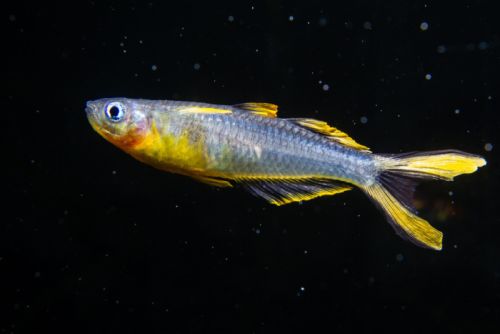
Live plants are highly recommended to provide shelter and visual barriers. Floating plants help diffuse light and create a more natural environment. Moderate lighting highlights their yellow fins and blue eyes.
A gentle to moderate flow mimics their native waters and keeps them active. Efficient biological filtration is important, but strong currents should be avoided. Weekly partial water changes help maintain water quality.
They are best kept in groups of at least eight individuals. Larger groups reduce stress and increase natural display behavior. A calm, well-structured tank brings out their best coloration and activity.
Male Forktail Blue-eye perform rapid fin flaring and shimmering color displays to attract females, especially in well-lit, planted aquariums. These displays intensify when multiple males are present.
In the wild, Forktail Blue-eye are often found schooling alongside other blue-eye species such as Pacific Blue-eye. This mixed-species association increases safety and reduces predation risk.
Forktail Blue-eye is primarily an insectivore in the wild. It feeds on tiny insects, larvae, and micro-crustaceans near the water surface. This natural diet should be reflected in captivity.
High-quality micro pellets and fine flakes can be used as staple foods. These should be appropriately sized to fit their small mouths. Dry foods alone are not ideal for optimal health.
Live and frozen foods are strongly recommended several times per week. Baby brine shrimp, daphnia, and mosquito larvae are excellent choices. These foods enhance coloration and reproductive condition.
Feed small portions once or twice daily. Avoid overfeeding, as uneaten food can quickly degrade water quality. A varied feeding routine supports immunity and long-term vitality.
Forktail Blue-eye are known to coexist peacefully with small, calm fish like Pygmy Corydoras, occupying different water levels without competition. This natural separation helps maintain stable community aquariums.
Forktail Blue-eye are sensitive to water quality changes, making their presence a useful indicator of healthy freshwater habitats. Sudden population declines often signal environmental degradation.
Breeding Forktail Blue-eye is achievable with proper setup and conditioning. They are continuous spawners and scatter adhesive eggs among fine plants. No parental care is provided after spawning.
A separate breeding tank increases fry survival. Spawning mops or dense moss are ideal for egg attachment. Slightly warmer water can encourage spawning activity.
Eggs are laid daily in small numbers over extended periods. Adults may consume eggs, so removal is recommended. Eggs usually hatch within ten to fourteen days.
Fry are extremely small and require infusoria at first. As they grow, baby brine shrimp can be introduced. Clean water and gentle filtration are critical for development.
Some links on this page may earn Fishmetry a commission at no extra cost to you.
What tank size is recommended for Forktail Blue-eye care?
A minimum of 15 gallons is suitable for a small group of Forktail Blue-eye, though larger aquariums provide better swimming space and stability. Keeping Forktail Blue-eye in well-planted tanks with gentle flow supports natural behavior and reduces stress.
How difficult is Forktail Blue-eye care for beginners?
Forktail Blue-eye are considered easy to moderately easy to care for when kept in stable water conditions. Consistent maintenance, gentle filtration, and a calm environment are key factors for successful Forktail Blue-eye care.
What is the typical behavior of Forktail Blue-eye in aquariums?
Forktail Blue-eye display active, peaceful, and social behavior, spending most of their time in the mid to upper water levels. Males may show mild displays toward each other, but Forktail Blue-eye rarely cause harm.
What diet is best for Forktail Blue-eye health and coloration?
Forktail Blue-eye thrive on a varied diet of high-quality micro pellets, flakes, and small live or frozen foods. Proper nutrition enhances coloration and overall vitality in Forktail Blue-eye.
Should Forktail Blue-eye be kept in groups or schools?
Forktail Blue-eye are schooling fish and should be kept in groups of at least six individuals. Group housing encourages natural interaction and reduces stress-related behavior in Forktail Blue-eye.
Are Forktail Blue-eye compatible with other community fish?
Forktail Blue-eye are highly compatible with peaceful species such as Neon Tetra, Harlequin Rasbora, and Pygmy Corydoras. Avoid aggressive or significantly larger fish to ensure long-term compatibility for Forktail Blue-eye.