

Easy
Galaxy Rasbora
Celestichthys margaritatus

Iriatherina werneri
Reviewed for accuracy · Last updated Jan 2, 2026, 10:39 PM
Males display gently and spar, but aggression is minimal; schooling reduces stress, and calm surroundings keep fins intact.
Freshwater
Peaceful
Medium
16 gal (60 L)
2 in (5.5 cm)
3–5 years
Omnivore
Resident
Choose calm, similarly sized community fish. Small tetras and peaceful rasboras work well. Bottom dwellers should be non intrusive.
Avoid fin nippers and boisterous swimmers. Large or aggressive species cause stress and damage. Keep male ratios balanced to reduce displays.
Invertebrates like shrimp are generally safe. Provide cover so all species can retreat. A tranquil mix encourages natural behavior.
Celestichthys margaritatus

Microdevario kubotai
Pseudomugil furcatus
Pseudomugil signifer
Provide a mature, well planted aquarium with gentle filtration and steady parameters. Floating plants and fine-leaved stems offer security and display spaces. Open midwater lanes help males extend fins without snagging.
Maintain soft to moderately hard water with consistent warmth. Avoid strong currents, as delicate fins fatigue easily. Weekly small water changes preserve clarity and stability.
Use subdued lighting to reduce stress and enhance coloration. A dark substrate improves contrast and confidence. Stable groups thrive when environmental changes are gradual.
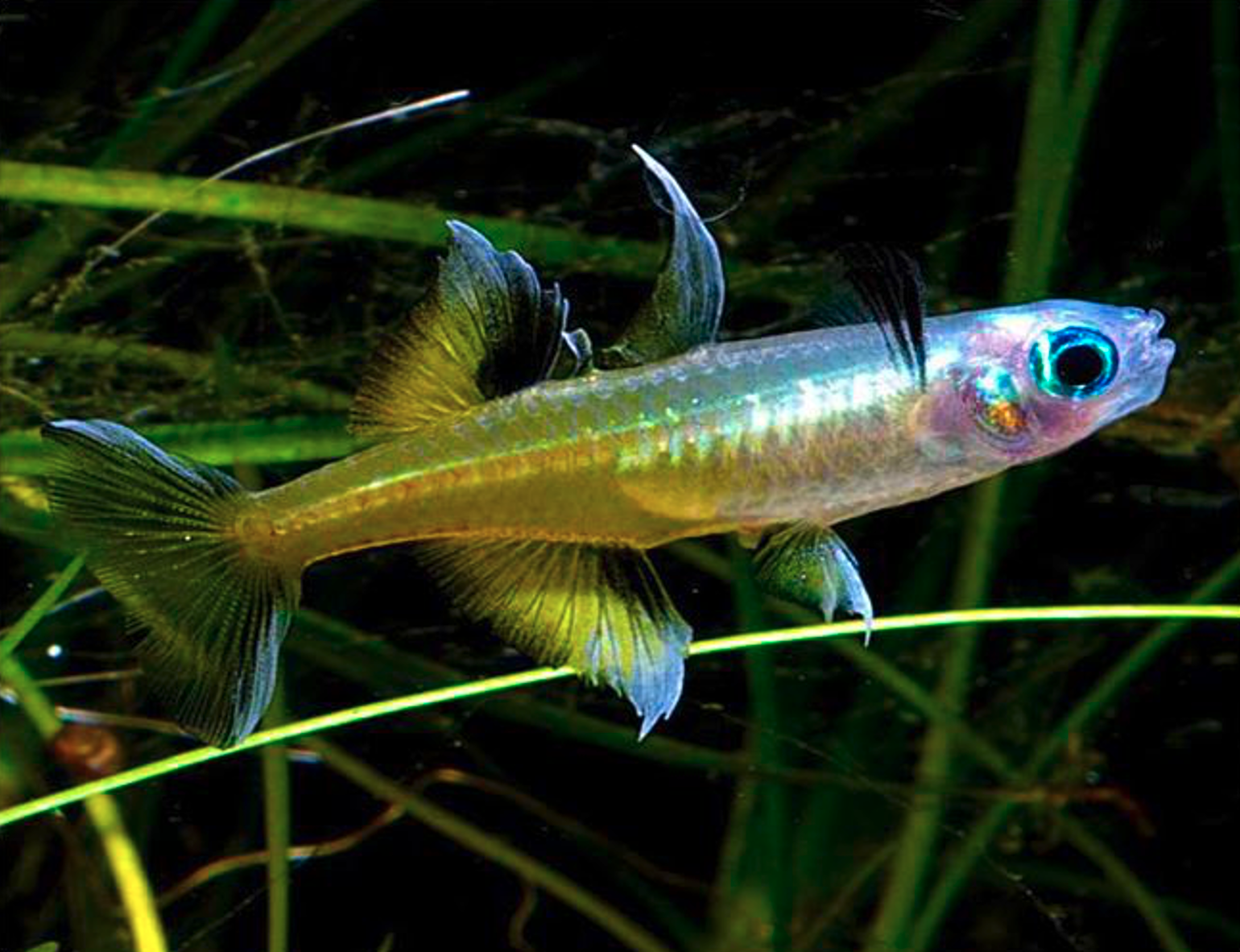
Male Threadfin Rainbowfish are known for their elongated fins, which they spread wide during courtship displays to attract females. These displays are most pronounced in calm, well-planted aquariums.
Threadfin Rainbowfish often form loose associations with gentle species such as Forktail Blue-eye, sharing mid-water zones without aggression. This coexistence works best in lightly stocked community tanks.
Offer a varied diet focused on small, high quality foods. Micro pellets and finely crushed flakes should be staple items. Feed sparingly to keep water pristine.
Supplement daily with live or frozen foods like daphnia. Baby brine shrimp and cyclops stimulate natural hunting. Rotate foods to cover micronutrient needs.
Multiple small meals suit their fast metabolism. Observe feeding to ensure timid fish eat. Remove excess food promptly to protect fin health.
Threadfin Rainbowfish are sensitive to strong currents and boisterous tank mates, making them indicators of overly active aquarium environments. Their behavior becomes subdued when housed with fast fish like Zebra Danio.
In the wild, Threadfin Rainbowfish inhabit slow-moving, vegetation-rich waters in Australia and New Guinea. Their delicate fins are an adaptation to these calm environments rather than fast-flowing rivers.
Condition breeders with abundant live foods. Slightly warmer water can encourage spawning. Use fine plants or spawning mops.
Eggs are scattered and adhesive. Adults may consume eggs if left together. Remove parents after spawning.
Eggs hatch in about a week. Feed fry infusoria then baby brine shrimp. Maintain spotless water for steady growth.
Some links on this page may earn Fishmetry a commission at no extra cost to you.
What tank size is recommended for Threadfin Rainbowfish care?
A minimum tank size of 20 gallons is recommended to provide stable conditions and gentle swimming space for Threadfin Rainbowfish. Taller, well-planted aquariums help protect the delicate fins of Threadfin Rainbowfish.
How difficult is Threadfin Rainbowfish care for aquarists?
Threadfin Rainbowfish require attentive care due to their sensitivity to strong currents and poor water quality. Consistent maintenance and calm tank conditions are essential for long-term Threadfin Rainbowfish health.
What behavior is typical of Threadfin Rainbowfish?
Threadfin Rainbowfish are peaceful, shy, and slow-moving, with males displaying elongated fins during courtship. Stress or fin damage may occur if Threadfin Rainbowfish are housed with overly active fish.
What diet is best for Threadfin Rainbowfish?
Threadfin Rainbowfish thrive on small, slow-sinking foods such as micro pellets, crushed flakes, and live or frozen foods. A varied diet supports fin condition and coloration in Threadfin Rainbowfish.
Should Threadfin Rainbowfish be kept in groups?
Threadfin Rainbowfish should be kept in groups of at least six to reduce stress and encourage natural behavior. Grouping allows Threadfin Rainbowfish to display without excessive competition.
Are Threadfin Rainbowfish compatible with other community fish?
Threadfin Rainbowfish are compatible with gentle species such as Forktail Blue-eye, Ember Tetra, and Pygmy Corydoras. Avoid fast or fin-nipping fish to maintain compatibility with Threadfin Rainbowfish.