

Medium
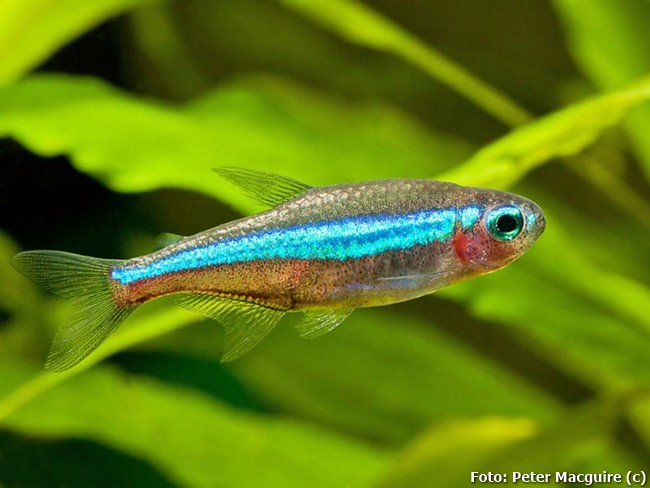
Green Neon Tetra
Paracheirodon simulans

Epiplatys annulatus
Reviewed for accuracy · Last updated Feb 27, 2026, 4:00 AM
Small surface-dwelling killifish that is calm and shy, prefers groups, avoids conflict, and shows male displays.
Freshwater
Very Peaceful
Easy
5 gal (20 L)
1 in (3.5 cm)
3–5 years
Insectivore
Resident
This species is extremely peaceful and easily intimidated. Tank mates must be small, calm, and non-aggressive. Boisterous or fast-swimming fish should always be avoided.
Suitable companions include small rasboras and tiny tetras. Other peaceful killifish species can work in larger setups. All tank mates should share similar water parameter needs.
Dwarf shrimp and snails are generally safe companions. The fish rarely show interest in anything below the surface. Providing space reduces accidental stress interactions.
Avoid fin-nippers and surface-dominant competitors. Community harmony depends on low stocking density. Peaceful environments allow natural schooling behavior.
Paracheirodon simulans
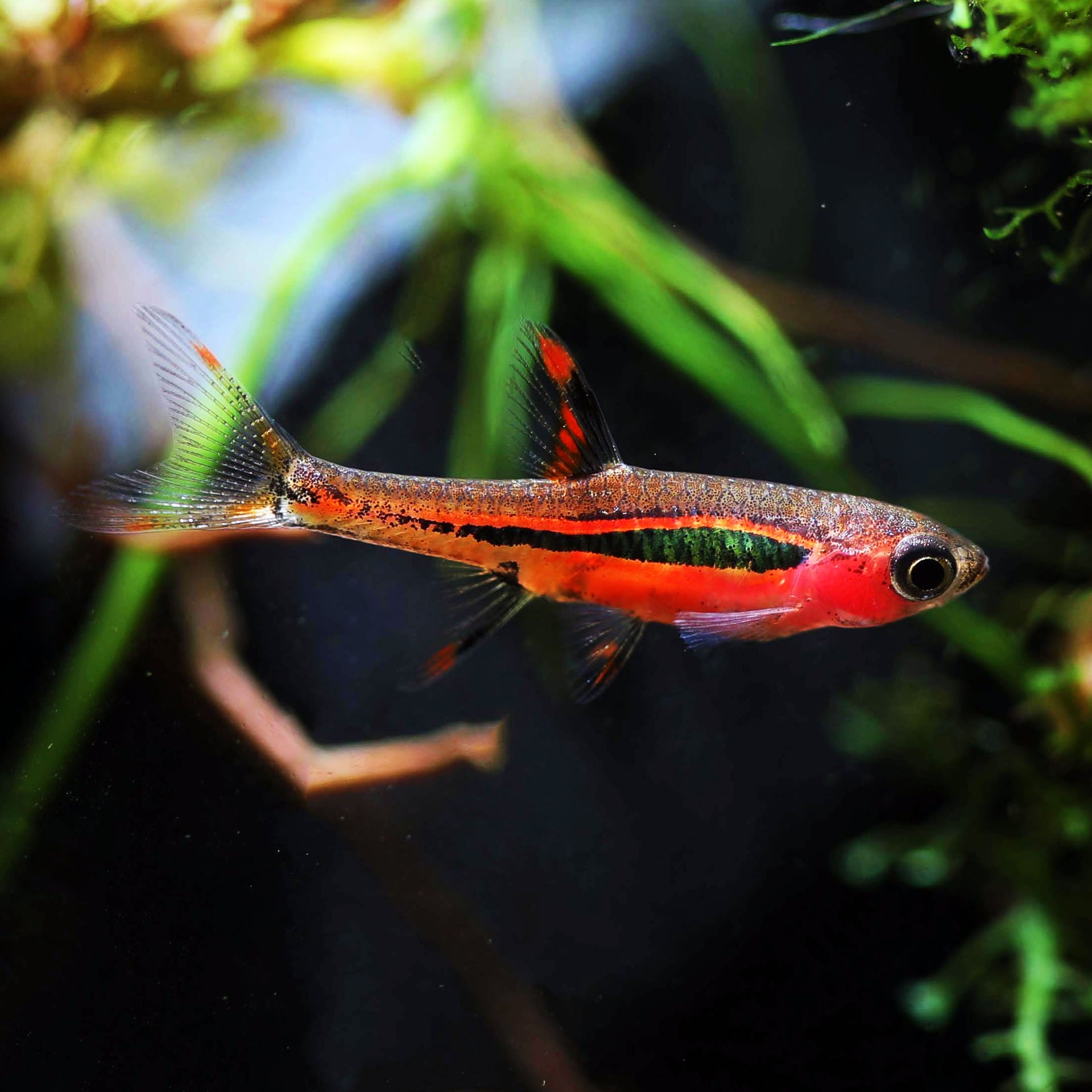
Boraras brigittae

Corydoras pygmaeus

Hyphessobrycon amandae
Pseudomugil furcatus
Clown Killifish thrive in small, calm aquariums with gentle water movement. They prefer heavily planted tanks that provide shade and surface cover. Floating plants help them feel secure and encourage natural behavior.
Water should be clean, stable, and slightly acidic to neutral in reaction. Soft water conditions closely resemble their natural West African habitats. Regular small water changes are better than large, infrequent ones.
Lighting should be moderate, avoiding overly bright setups. Dark substrate and natural décor reduce stress and enhance coloration. Lids are essential, as this species can jump when startled.
Despite their size, stability is more important than volume. A mature, cycled aquarium prevents sudden parameter swings. Consistency in care leads to long-term health and activity.
The Clown Killifish is biologically adapted to live almost exclusively at the water surface, using its upturned mouth to capture tiny insects and larvae.
The surface-oriented lifestyle of the Clown Killifish makes it vulnerable to competition from faster fish such as the Endler Guppy, which can outcompete it for floating food.
Clown Killifish are surface-oriented micro-predators by nature. They instinctively hunt small insects and larvae at the water surface. This behavior should guide their feeding routine in captivity.
Live and frozen foods such as daphnia and mosquito larvae are ideal. These foods stimulate natural hunting responses and improve coloration. High-quality micro pellets can be accepted with gradual training.
Food should be offered in small portions once or twice daily. Uneaten food must be avoided to maintain water quality. Surface feeding rings help ensure food stays accessible.
A varied diet prevents nutritional deficiencies over time. Consistency matters more than quantity when feeding this species. Well-fed fish display stronger immunity and more vivid patterns.
In nano community aquariums, the Clown Killifish often coexists well with calm bottom dwellers like the Pygmy Corydoras, as they occupy entirely different water levels and rarely interact.
The Clown Killifish originates from shallow, slow-moving waters in West Africa that fluctuate seasonally, influencing its small size, short lifespan, and rapid reproductive cycle.
Clown Killifish are relatively easy to breed in captivity. Spawning often occurs naturally in well-maintained aquariums. Dense floating plants act as preferred egg-laying sites.
Males display vivid colors to attract receptive females. Eggs are deposited individually rather than in large clusters. Adults typically ignore the eggs after spawning.
For higher survival rates, eggs can be moved to a separate tank. Incubation usually lasts around 10 to 14 days. Water quality stability is critical during development. Fry are very small and require infusoria initially. Gradually introduce larger foods as they grow. Calm conditions support steady and healthy growth.
Some links on this page may earn Fishmetry a commission at no extra cost to you.
What is the ideal tank size and setup for Clown Killifish Epiplatys annulatus?
A minimum of 5 gallons is suitable for a small group of Clown Killifish, with a longer footprint preferred over height. A tight-fitting lid is essential because Clown Killifish are skilled jumpers and spend most of their time near the water surface.
How should Clown Killifish Epiplatys annulatus be cared for in a home aquarium?
Clown Killifish thrive in soft, slightly acidic to neutral water with gentle filtration and minimal current. Stable parameters, floating plants, and subdued lighting help reduce stress and promote natural behavior in Clown Killifish.
What is the typical behavior of Clown Killifish Epiplatys annulatus?
Clown Killifish are peaceful, surface-oriented fish that display calm and deliberate movements. Males may show mild territorial displays toward each other, but Clown Killifish rarely exhibit aggressive behavior.
What do Clown Killifish Epiplatys annulatus eat?
Clown Killifish are micropredators that prefer small live or frozen foods such as daphnia, baby brine shrimp, and mosquito larvae. High-quality micro pellets can be accepted, but Clown Killifish usually show better health and coloration with protein-rich diets.
Do Clown Killifish Epiplatys annulatus need to be kept in groups?
Clown Killifish are best kept in small groups, typically one male with two or more females, to distribute attention and reduce stress. While not true schooling fish, Clown Killifish feel more secure and display more natural behavior when kept with conspecifics.
Are Clown Killifish Epiplatys annulatus compatible with other fish?
Clown Killifish are well suited for peaceful community tanks with small, non-aggressive species such as Ember Tetra, Chili Rasbora, and Pygmy Corydoras. Larger or fast-swimming fish may outcompete Clown Killifish for food and cause stress.