


Easy
Neon Tetra
Paracheirodon innesi

Corydoras panda
Reviewed for accuracy · Last updated Jan 2, 2026, 9:51 PM
Very peaceful schooling catfish that stays near the bottom, active in groups, shy alone, never aggressive.
Freshwater
Very Peaceful
Easy
16 gal (60 L)
2 in (4.5 cm)
5–10 years
Omnivore
Resident
Panda Cory (Corydoras panda) is an extremely peaceful fish species and is well suited for community aquariums. It coexists best with calm mid- and top-dwelling species such as the Neon Tetra (Paracheirodon innesi) and the Harlequin Rasbora (Trigonostigma heteromorpha). Aggressive or fin-nipping species should always be avoided, as they can stress or injure Panda Corys.
Ideal tank mates for Panda Cory (Corydoras panda) include small schooling species like the Neon Tetra (Paracheirodon innesi), gentle rasboras such as the Harlequin Rasbora (Trigonostigma heteromorpha), and peaceful livebearers like the Platy (Xiphophorus maculatus). In larger aquariums, calm dwarf cichlids such as the German Blue Ram (Mikrogeophagus ramirezi) can also be compatible.
Other Corydoras species, including the Bronze Cory (Corydoras aeneus), make excellent companions and help reinforce natural schooling behavior. Large predatory species like the Oscar (Astronotus ocellatus) should be avoided, as they may view Panda Corys as prey. Maintaining stable social groups and balanced stocking levels reduces stress and promotes healthy, active behavior in the aquarium.
Paracheirodon innesi
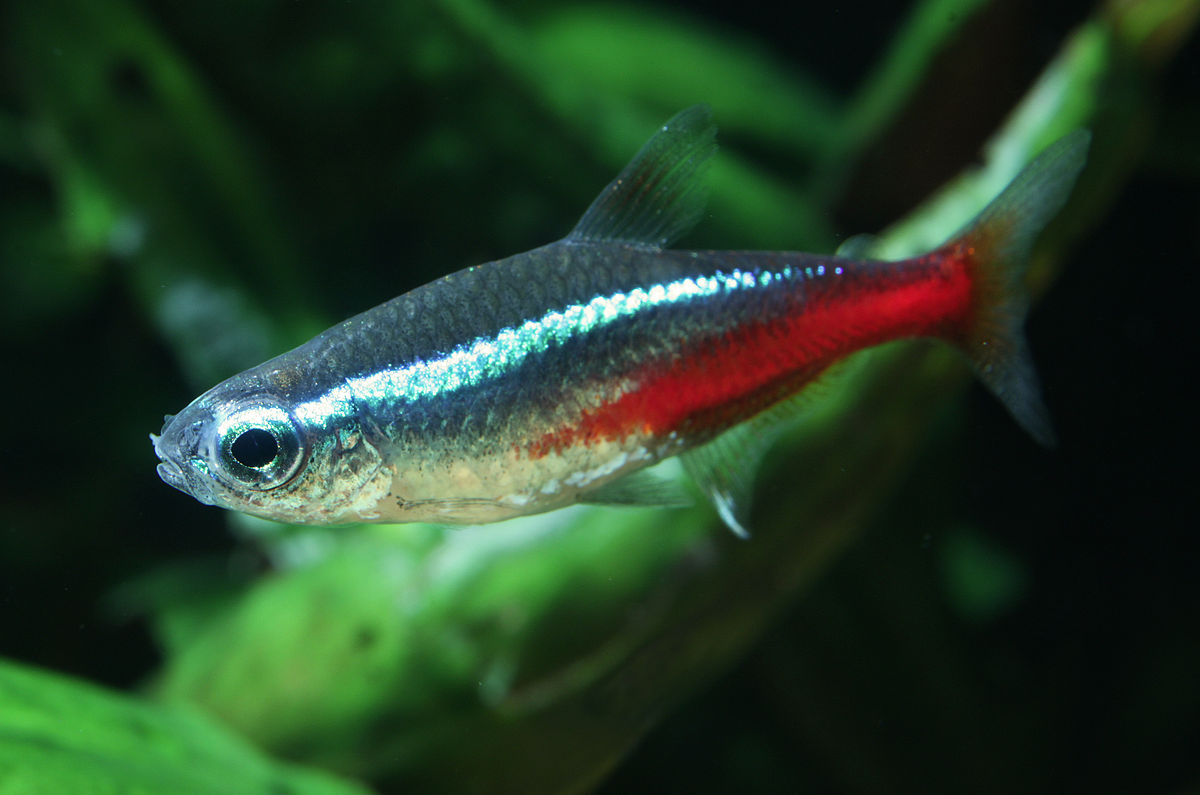
Paracheirodon axelrodi
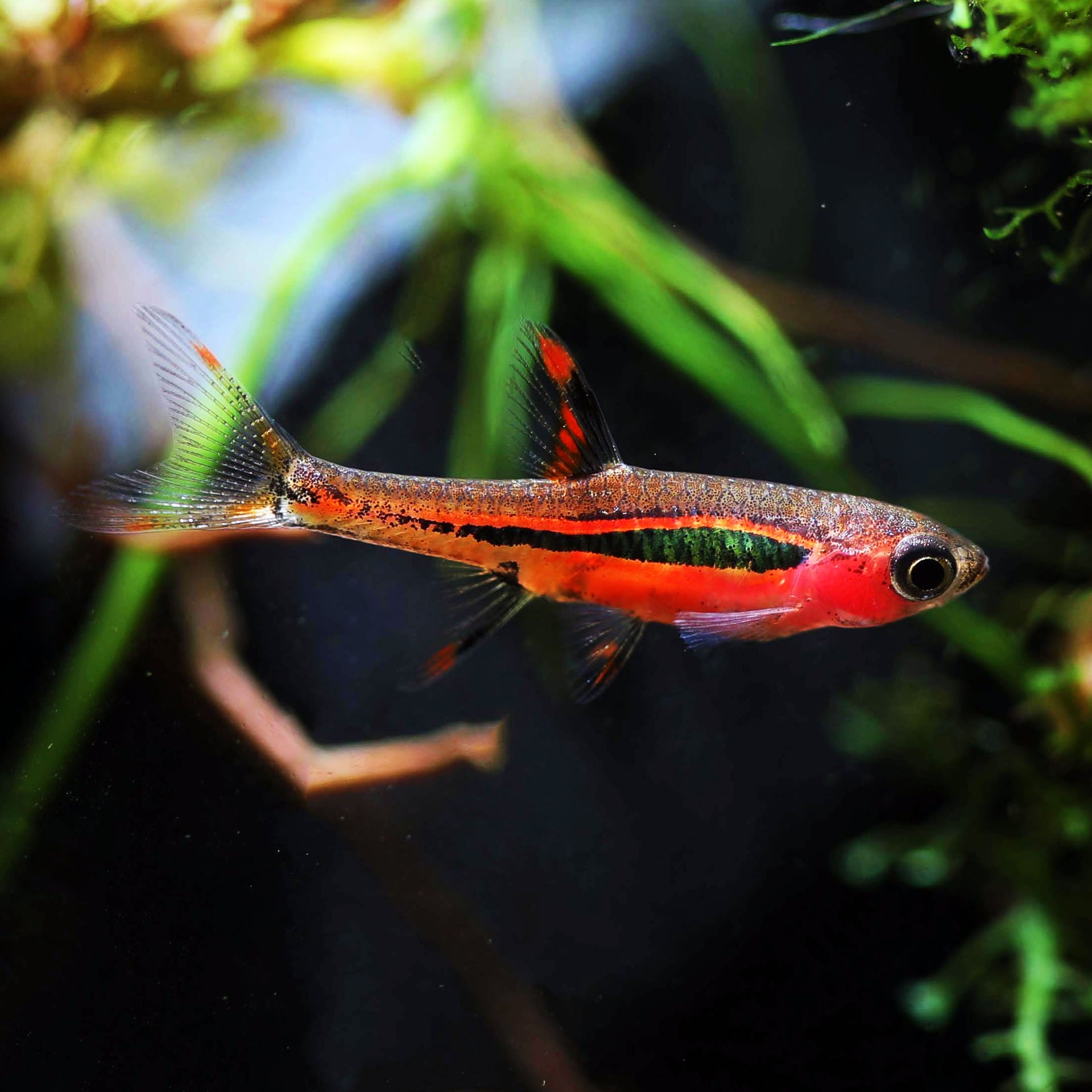
Boraras brigittae
Pseudomugil furcatus

Trichopodus leerii
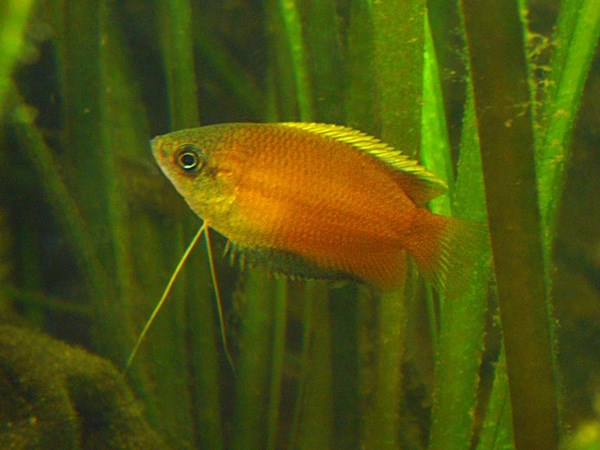
Trichogaster chuna
Panda Corys thrive in well oxygenated freshwater aquariums with soft to moderate flow. They prefer fine sand substrates that protect their sensitive barbels. Stable water quality is essential as they react quickly to pollution.
Dense planting combined with open areas helps reduce stress and supports natural behavior. Driftwood and smooth rocks provide shade and resting spots during the day. Lighting should be moderate, mimicking shaded river habitats.
Weekly water changes and consistent parameters are critical for long term health. They do best in groups of six or more individuals. A calm environment encourages constant activity and social interaction.
Panda Corys are omnivorous bottom feeders that require varied nutrition. They actively search the substrate for edible particles. Sinking foods ensure proper access to meals.
High quality sinking pellets or wafers should form the dietary base. Frozen foods like bloodworms and daphnia add protein and enrichment. Occasional live foods further stimulate natural foraging behavior.
Vegetable matter such as blanched zucchini can be offered in small amounts. Feed small portions once or twice daily. Remove uneaten food to preserve water quality.
Breeding Panda Corys is achievable with proper conditioning. Cooler water changes often trigger spawning behavior. Clean water and high oxygen levels are key factors.
Females lay adhesive eggs on glass, plants, or decorations. After spawning, adults may eat eggs if left together. Separating eggs improves survival rates.
Eggs typically hatch within four days depending on temperature. Fry should be fed infusoria or finely powdered foods. Gradual growth occurs with frequent small feedings.
Some links on this page may earn Fishmetry a commission at no extra cost to you.
What care requirements do Panda Corys have in a home aquarium?
Panda Corys require a well-maintained aquarium with clean, oxygen-rich water, soft substrate to protect their barbels, and stable water parameters. Regular water changes, gentle filtration, and a temperature range of 22–26 °C help ensure long-term health and natural behavior.
What is the ideal tank size for Panda Corys?
Panda Corys should be kept in groups in an aquarium of at least 60 liters to allow proper schooling behavior and movement. Larger tanks provide better stability, more swimming space, and reduced stress, especially when kept with other peaceful fish.
How do Panda Corys behave in community aquariums?
Panda Corys are peaceful, bottom-oriented fish that spend much of their time foraging together. They are non-aggressive and thrive in calm environments, making them well suited for community aquariums with similarly peaceful species.
What do Panda Corys eat for optimal health?
Panda Corys are omnivorous and require a varied diet that includes sinking pellets, wafers, and occasional live or frozen foods. A balanced feeding routine supports proper growth, coloration, and immune health.
Do Panda Corys need to be kept in groups?
Panda Corys are schooling fish and should always be kept in groups of at least six individuals. Group living reduces stress, encourages natural behaviors, and improves overall well-being compared to keeping them singly or in very small numbers.
Which fish are compatible tank mates for Panda Corys?
Panda Corys coexist well with small, peaceful fish such as Neon Tetra, Harlequin Rasbora, and Honey Gourami. They can also share tanks with other gentle bottom dwellers like Bronze Cory as long as space and water conditions are appropriate.